English
 中文简体
中文简体 Tiếng Việt
Production of various high-end fabrics reaches 7 million meters annually, including a wide range of fashionable new products and exquisite items, with a broad coverage of color patterns.

Why Modal-Cotton Dyed Cloth Outperforms Pure Cotton in Color & Comfort
2026-07-24
Content
Modal-Cotton Dyed Cloth vs. Pure Cotton: A Technical Guide to Dyeing Performance and Fabric Quality
Sourcing managers evaluating apparel fabrics often face a direct choice: stick with familiar pure cotton or upgrade to a modal-cotton blend. The decision becomes clearer once you isolate the critical variable—dyeing quality. Modal-cotton dyed cloth consistently delivers richer color, superior wash-fastness, and a hand feel that pure cotton cannot match after the same dye cycle. This guide breaks down the technical differences buyers need to assess before placing their next order.
Understanding the Unique Composition of Modal-Cotton Dyed Cloth
Modal-cotton dyed cloth is a blend of natural cotton fibers and modal, a regenerated cellulose fiber derived from beechwood pulp. The most common commercial blends range from 50% cotton / 50% modal to 60% cotton / 40% modal. This balance captures cotton’s breathable structure while leveraging the even cross-section and smooth surface of modal, which directly influences dye uptake. For a deeper technical breakdown, see our resource on modal-cotton dyed cloth fiber ratios and dyeing behavior.
Unlike cotton, whose irregular lumen and convolutions can create micro-variations in dye penetration, modal fibers possess a more uniform amorphous region. This structural consistency is why mills can achieve a level color with less dye rework, reducing both production time and chemical waste.
Key Performance Differences: Why Dyeing Quality Matters
When evaluating fabric, the dyeing result is often the first quality signal a buyer notices. Subtle color unevenness or early wash-down can lead to costly rejections. Modal-cotton dyed cloth addresses these pain points at the fiber level. For a side-by-side evaluation, read our article on the differences between modal-cotton and pure cotton fabrics in detail.
Superior Dye Absorption and Color Brilliance
Modal’s high amorphous cellulose content creates more accessible sites for dye molecules to bond, even in warm water. In production, this means modal-cotton blends achieve deeper, more saturated shades using the same dye concentration applied to pure cotton. The result is a noticeably brighter and more uniform color appearance that holds across the entire roll. For brands selling deep blacks, rich navies, or jewel tones, this eliminates the need for double dyeing passes and lowers the risk of shade banding.
Enhanced Colorfastness and Reduced Bleeding
One of the most common complaints about pure cotton dyed fabrics is crocking and wash-down after the first few launderings. Modal-cotton blends significantly reduce this problem. The modal component locks in dye molecules more effectively, so the fabric shows less color transfer in wet and dry conditions. In testing, these blends routinely achieve a half-grade to full-grade higher colorfastness rating than comparable all-cotton constructions. For activewear and children’s wear, where frequent washing is expected, this difference changes a product’s lifecycle perception.
Beyond Dyeing: Other Critical Advantages Over Pure Cotton
Unmatched Softness and Hand Feel
The smooth filament-like surface of modal gives modal-cotton dyed cloth a fluid drape and a cool, silky touch that pure cotton—even with softener treatments—struggles to replicate. This hand feel does not wash out; it is inherent in the fiber. Apparel designers often select these blends for tops, dresses, and loungewear where skin contact comfort is a primary selling point.
Dimensional Stability and Lasting Shape
Shrinkage is materially lower in modal-cotton blends thanks to the fiber’s inherent stability and controlled finishing. While standard pure cotton knits can lose up to 5% of their dimensions in the first wash, a well-constructed modal-cotton dyed cloth typically stays within a 2–3% tolerance. This predictability allows pattern makers to grade more accurately and reduces returns caused by ill-fitting garments after home laundering. For a stretch variant that demonstrates this control under real-world conditions, review the GS1742D super stretch cotton-modal twill dyed cloth sample.
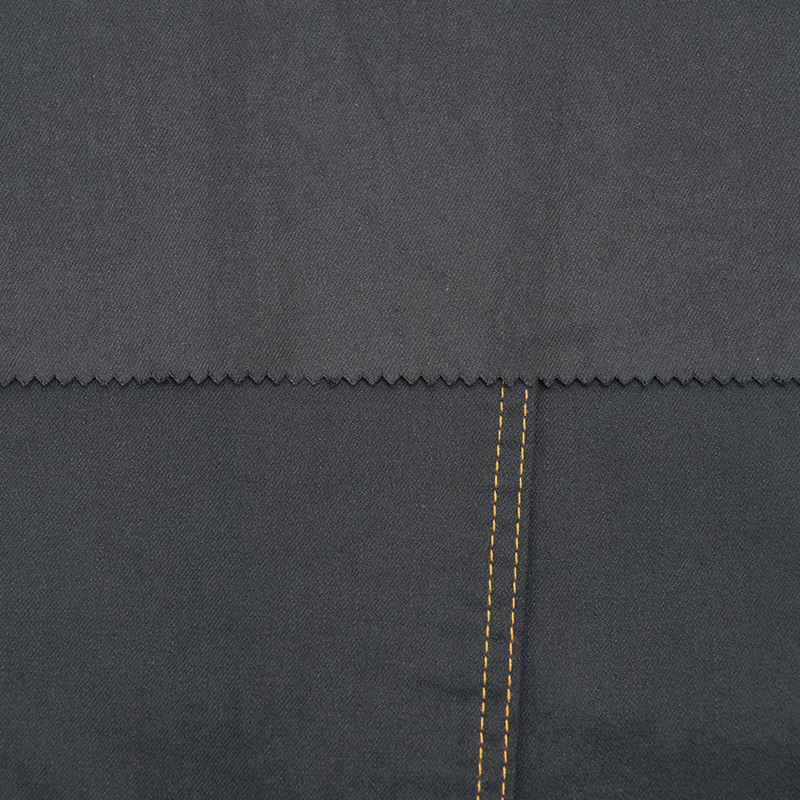 Custom GS1742D Super Stretch Cotton-Modal Stretch Twill Dyed Cloth Suppliers, CoChangzhou Huiya Textile is China custom GS1742D Super Stretch Cotton-Modal Stretch Twill Dyed Cloth suppliers and company, details: Super...View Product →
Pilling Resistance for Long-Term Use
Short fiber ends on the surface of cotton yarns are a primary cause of pilling. Modal fibers, by contrast, are longer and smoother, reducing the number of protruding ends that tangle and form pills. The result is a fabric that retains a clean surface appearance after extended wear. For performance-driven categories, this advantage translates directly into better customer reviews and fewer warranty claims.
Related Products


-

- Address: No.8 Longxuan Road, Lijia Town, Wujin District, Changzhou, China
- Phone: +86-13301509168
- Email: [email protected]
- BE THE FIRST TO KNOW
- For exclusive deals and latest offers, sign up by entering your email address below.
- QUICK LINKS
RELATED CERTIFICATIONS: