English
 中文简体
中文简体 Tiếng Việt
Production of various high-end fabrics reaches 7 million meters annually, including a wide range of fashionable new products and exquisite items, with a broad coverage of color patterns.

Corduroy Dyed Fabric: Dyeing Processes and Quality Guide
2026-07-17
Content
- 1 Why One Corduroy Bolt Outperforms Another
- 2 What Defines Corduroy Dyed Fabric
- 3 Dyeing Methods and Their Impact on Appearance
- 4 Fiber Composition and Dye Affinity
- 5 How Corduroy Type Influences Dyed Results
- 6 Quality Benchmarks for Dyed Corduroy
- 7 Sourcing Considerations for Consistent Results
- 8 Applications Where Dyed Quality Shows First
Why One Corduroy Bolt Outperforms Another
You pull two swatches of the same wale count and a near-identical shade. One feels plush, holds its depth after a dozen industrial washes, and shows zero crocking. The other starts to streak, the pile collapses, and the color drifts. The difference almost always traces back to how the fabric was dyed, not just what it was made from. Corduroy dyed fabric is a category where dyeing method, fiber blend, and finishing intersect to determine final performance.
This article breaks down the dyeing processes used for corduroy, how fabric composition alters dye uptake, and what to check before you commit to a bulk order. You’ll also see how specific corduroy dyed fabric types—from classic cotton to dobby jacquard—behave under different colorants.
What Defines Corduroy Dyed Fabric
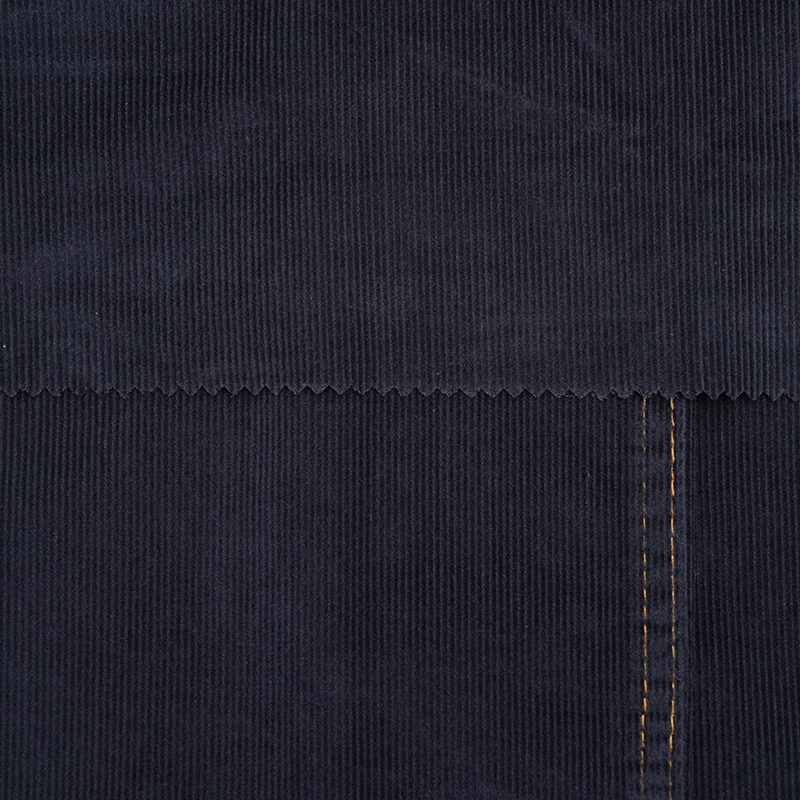
Corduroy is a ribbed pile textile where vertical cords, or wales, are formed by cutting a supplementary weft. The fabric can be dyed at several stages: as loose stock, yarn, greige fabric, or finished garment. In commercial production, piece dyeing—coloring the entire woven cloth after it’s formed—dominates because it offers fast turnarounds and economical minimums. Yarn-dyed corduroy, while less common for solid shades, remains a premium route for multi-color patterns like checks or stripes.
Piece dyeing accounts for over 80% of all solid-color corduroy produced globally. The method’s efficiency, however, places extra pressure on uniformity: any variation in pile density or fiber absorption becomes immediately visible in the finished roll. This is why understanding the underlying fabric construction matters before you even evaluate dyed samples.
Dyeing Methods and Their Impact on Appearance
Piece Dyeing
The woven greige fabric is run through a dye bath under controlled heat and agitation. Cotton corduroy typically uses reactive dyes for vibrant, wash-fast colors. Blends containing modal or rayon may shift to direct or reactive dyes depending on the proportion. The key challenge: the pile can flatten or trap uneven dye if the circulation isn’t precise. High-quality suppliers counteract this with pre-saturated pre-treatments and post-dye brushing that lifts the pile back to its original height.
Garment Dyeing
Here, finished garments are dyed after cut-and-sew. Garment dyeing delivers a soft, broken-in feel and slight tonal variations prized in casualwear. Yet it demands fabrics engineered to withstand the process—the seams must tolerate hot water and mechanical stress. For corduroy, this method often works best with medium to heavy wales that hold their structure during tumbling.
Continuous Dyeing
Large-scale operations use continuous dyeing ranges for thousands of meters per run. The fabric passes through a padder, steamer, and washer in sequence. This method achieves excellent shade consistency across entire production lots. Continuous ranges can hold a delta E color difference below 0.8 for runs exceeding 5,000 meters, making it the preferred route for high-volume apparel programs.
Fiber Composition and Dye Affinity
Not all corduroy takes color the same way. The base fiber dictates which dyes bond properly, the saturation level attainable, and how the fabric ages.
- 100% Cotton Corduroy: High dye uptake with reactive dyes, excellent washfastness, but prone to slight surface fading after extended UV exposure if not after-treated.
- Cotton-Modal Blends: Modal’s higher hygroscopicity pulls dye faster, sometimes creating a heathered effect if the blend ratio isn’t tightly controlled. Pre-blending and single-step reactive dyeing mitigate this.
- Stretch Corduroy (Cotton-Spandex): Spandex filaments resist reactive dyes, so the cotton component must carry the entire color load. Fabric construction must ensure the elastane remains fully covered to avoid white specks.
- Cotton-Polyester Blends: Polyester demands disperse dyes at high temperatures. The typical route is a two-bath process, which adds cost and time.
When exploring cotton-blend corduroy dyed fabrics, always request lab dips on the exact blend percentage you intend to order. Even a 3% shift in modal content can alter the final shade visibly.
How Corduroy Type Influences Dyed Results
Standard Wales (8–14 wale)
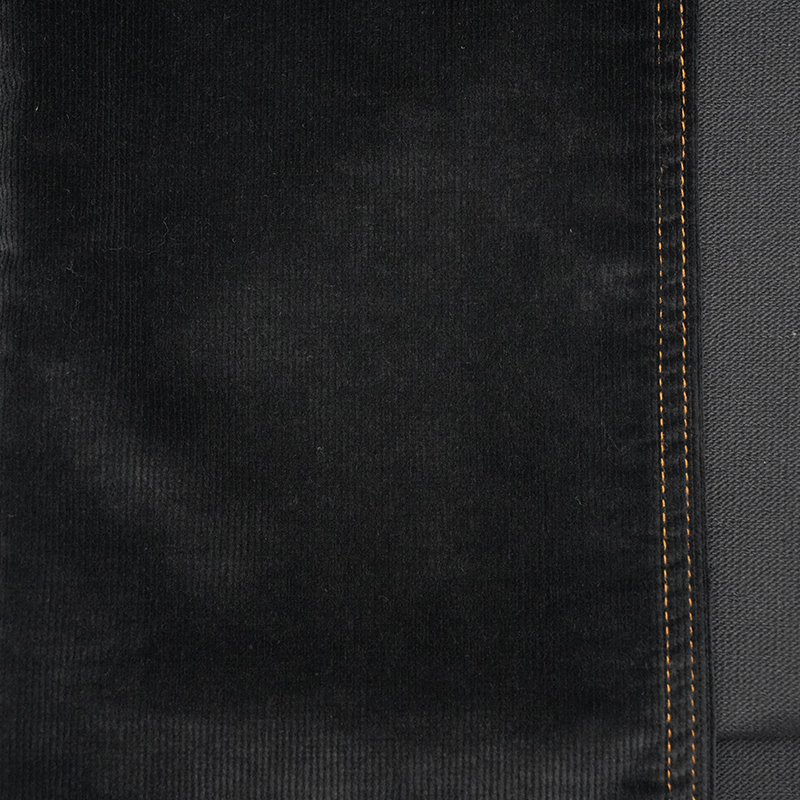
Fine-wale corduroy (like 11-wale or 14-wale) tends to reflect light differently than wide-wale. The narrower the ribs, the more the fabric’s surface acts like a flat plane, showing depth mainly in the pile valleys. Dye penetration here must be thorough, as shallow shade in the base fabric creates a stripe effect when the pile separates with wear.
Double Corduroy
With wales on both face and back, double corduroy requires piece dyeing that fully saturates the thickness. Any core undyed area becomes visible in cut edges or seam allowances. Double corduroy dye cycles often require 20–30% longer immersion time to achieve full penetration.
Velveteen Cord
Velveteen, a short-pile variation with 24 or more wales, behaves similarly to velvet during dyeing. Its dense surface demands gentle handling to avoid pile crush. Post-dye tenter framing with precise width control is critical, else the fabric loses its characteristic supple hand.
Jacquard Dobby Corduroy
Textured patterns woven directly into the pile structure create different dye absorption zones. The raised motifs often appear darker, while recessed areas stay slightly lighter, producing subtle two-tone effects without piece-to-piece shade deviation. Jacquard dobby corduroy dyed fabrics require extra attention during finishing to preserve the pattern definition after wet processing.
Quality Benchmarks for Dyed Corduroy
Assessing a dyed corduroy lot involves more than a visual check under office lights. The following table outlines core test parameters and what they reveal.
| Test | What It Checks | Target (Cotton Corduroy) |
|---|---|---|
| Colorfastness to Washing (ISO 105 C06) | Shade change and staining after multiple wash cycles | Grade 4 minimum |
| Rubbing/Crocking (AATCC 8) | Dry and wet color transfer | Dry: Grade 4, Wet: Grade 3 |
| Light Fastness (ISO 105 B02) | Fading under UV exposure | Grade 4 (36 hours) |
| Shade Consistency (Delta E CMC) | Color difference between production lots | Delta E < 1.0 |
| Pile Distortion After Wash | Wale deformation and surface smoothness | No visible flattening |
Always request a pre-production sample from the same dye lot that will supply your main order. Hand-feel panels should be washed once before evaluation, as corduroy softens and the color stabilizes after the first wet cycle.
Sourcing Considerations for Consistent Results
Suppliers with in-house dyeing and finishing offer tighter control. When vetting a mill, ask for their dye lot size limits, process flow for corduroy specifically, and whether they maintain pantone or lab-dipped shade libraries. Certifications like GOTS or OEKO-TEX for the dyes themselves matter especially if the end use is children’s wear or direct skin contact.
Specify the final color on the greige weight and wale count you’ll actually order. Cutting a swatch from a different base construction, even if the same dye recipe is used, often results in a misleading color match. If your program spans multiple wale types, plan for separate lab dips per each base, not a single approval carried across.
Suppliers that run automated dispensing and closed-loop dye bath monitoring achieve first-time right rates above 95% for repeat shades. This level of consistency eliminates the cost of reworks and short shipments.
Applications Where Dyed Quality Shows First
Corduroy dyed fabric appears across numerous product categories, but certain end uses put the dyeing quality under immediate scrutiny. Trousers and jackets with high-wear areas (knees, elbows) reveal crocking resistance quickly. Upholstery exposed to regular sunlight tests light fastness. Apparel brands running seasonal color stories depend on tight shade matching across multiple garment factories. In each case, the fabric’s dyeing integrity directly affects returns, brand reputation, and operational cost.
Blended corduroys—cotton-modal, recycled polyester-cotton—are gaining ground in collections that prioritize softness without sacrificing durability. The dyeing process for these hybrids requires deeper technical knowledge but unlocks unique surface aesthetics.
Related Products

-

- Address: No.8 Longxuan Road, Lijia Town, Wujin District, Changzhou, China
- Phone: +86-13301509168
- Email: [email protected]
- BE THE FIRST TO KNOW
- For exclusive deals and latest offers, sign up by entering your email address below.
- QUICK LINKS
RELATED CERTIFICATIONS: