English
 中文简体
中文简体 Tiếng Việt
Production of various high-end fabrics reaches 7 million meters annually, including a wide range of fashionable new products and exquisite items, with a broad coverage of color patterns.

Twill Weave: How the Diagonal Structure Works and What Buyers Should Know
2026-09-18
Content
Run a hand across a pair of jeans, a set of work trousers, or the canvas of a tool bag and you will feel fine diagonal ridges running across the surface. That texture is the signature of twill weave. The short answer to why it matters: twill is the structure mills choose when a fabric has to resist abrasion, drape cleanly, and keep looking presentable between washes. Together with plain weave and satin, it forms one of the three fundamental weaves from which nearly every woven cloth is built, and it sits behind a large share of the trade's highest-volume fabrics, including denim, drill, chino, gabardine, and cavalry twill. Knowing how that diagonal is engineered on the loom explains most of what a buyer needs to confirm before placing an order.
How the Diagonal Structure Is Built
Every woven fabric interlaces two yarn systems: the warp, which runs lengthwise through the loom, and the weft, which crosses it. In a plain weave the weft alternates over and under every warp end without exception. A twill works differently. The weft passes over one to three warp ends, then under one or more, and each successive row shifts the interlacing point by one thread. Those staggered floats line up into the parallel diagonal ribs that weavers call wales.
Technologists write the pattern as a fraction. A 2/1 twill interlaces over two ends and under one; a 3/1 twill floats over three and under one. Which yarn dominates the face depends on which system carries the long floats: denim is classically a 3/1 warp-faced twill, with indigo-dyed warp yarns forming the face while the undyed weft shows only on the reverse. The smallest repeat that produces a true diagonal is three warp ends by three picks, and the direction of the shift decides whether the wales run to the right or to the left on the finished cloth.
The shift can also be interrupted. Reversing the wale direction at set intervals produces herringbone, the chevron pattern familiar from suits and outerwear, while deliberately offsetting threads creates broken twills with a quieter, subtler texture.
These small structural choices, meaning float length, shift direction, and which yarn takes the face, are the same levers explained in our wider guide to how weave types shape fabric quality and sourcing outcomes.
Plain Weave, Twill, and Satin Compared
Set against the other two fundamental weaves, the trade-offs twill makes become obvious:
| Aspect | Plain weave | Twill weave | Satin weave |
|---|---|---|---|
| Interlacing | Over-under every thread | Staggered, shifted one thread per row | Long floats, rare crossings |
| Face and back | Identical both sides | Diagonal wales, face slightly deeper | Smooth and lustrous |
| Strengths | Stable, prints evenly | Durable, drapes well, hides soil | Luxurious hand and sheen |
| Watch-outs | Stiffer hand, lower density | Longer floats can snag | Delicate, prone to slippage |
| Familiar fabrics | Poplin, canvas, sheeting | Denim, drill, chino, gabardine | Charmeuse, satincloth |
Reading Twill Ratios on a Spec Sheet
On a specification sheet, the ratio does most of the talking:
| Notation | Face construction | Character | Common end uses |
|---|---|---|---|
| 2/1 | Over two, under one | Lighter, softer face | Shirting twills, lighter chinos |
| 2/2 | Even over-two, under-two | Balanced face and back | Gabardine, serge, suitings |
| 3/1 | Over three, under one | Dense, rugged, warp-dominant | Denim, workwear drill, cavalry twill |
Steepness adds another variable. The more one yarn system dominates the interlacing, the more sharply the wales incline: gabardine is set on a steep twill line for a crisp, tight surface, while a balanced 45-degree twill feels rounder and more yielding in the hand.
Why the Structure Changes Fabric Performance
Because a twill has fewer interlacing points per square centimeter than a plain weave of the same yarn, the loom can carry more ends and picks before the cloth turns stiff and boardy. The result is a fabric that is at once denser and more supple. Abrasion behaves differently too: instead of striking a rigid grid of crossing points, wear travels across floating yarns that can shift slightly and share the load. That is why workwear, uniform trousers, and heavy bag canvas default to twill.
The same structure brings predictable trade-offs worth raising with a supplier:
- Long floats are easier to snag, so open twills need a snag test if garments meet rough surfaces.
- The face usually carries longer floats than the back and reads slightly deeper in color, so garments should be cut with all pieces running the same way to avoid shading.
- A dense twill holds more yarn per meter than an equivalent plain weave, which raises the price per meter.
- Loosely set twills can slip at seams under stress, so seam strength should be tested on the actual construction rather than assumed from fiber content.
The diagonal also has a cosmetic advantage: it scatters light and masks dust and creasing, one reason drill and chino remain the default for uniforms that must look respectable between washes.
Where Twill Earns Its Keep
Twill constructions appear wherever durability and drape have to coexist. In apparel they carry denim jeans and jackets, chino trousers, gabardine tailoring, and brushed flannel shirts. In workwear they support heavy cotton drill and cavalry twill, whose pronounced double wale resists wear and reads as a deliberate design feature. Coated cotton twills extend the same structure into outdoor and industrial clothing, where the weave supplies strength and the coating supplies weather resistance. Denser twills also serve technical roles, from luggage and webbing to filter cloth, wherever a flexible fabric must hold a fine, close structure.
What Buyers Should Confirm Before Ordering
Because structure drives performance, a twill order deserves more precise specification than a generic "cotton twill" request. Five points cover most of the risk:
- Construction details: the weave ratio (2/1, 2/2, or 3/1), warp and weft yarn counts, ends and picks per inch, and weight in GSM. These numbers predict most of the hand, drape, and durability.
- Dyeing route: piece-dyed twills suit standard color programs, while garment-dye projects should start from scoured, bleached cloth; our cotton prepared-for-dyeing range exists precisely so the finished garment takes dye evenly.
- Stretch behavior: for elastane twills, ask for recovery data after repeated washing rather than the stretch percentage alone.
- Face management: confirm the wale direction and agree that pattern pieces will be cut in one direction to prevent tone differences.
- Certification: where recycled content matters, request documentation such as GRS certificates instead of relying on verbal claims.
Working from one integrated spinning, weaving, dyeing, and finishing line, we build twills across all of these routes. For garment-dye programs, our all-cotton cavalry slant cloth GS2300 is supplied in PFD form so the finished garment takes a level, uniform shade.
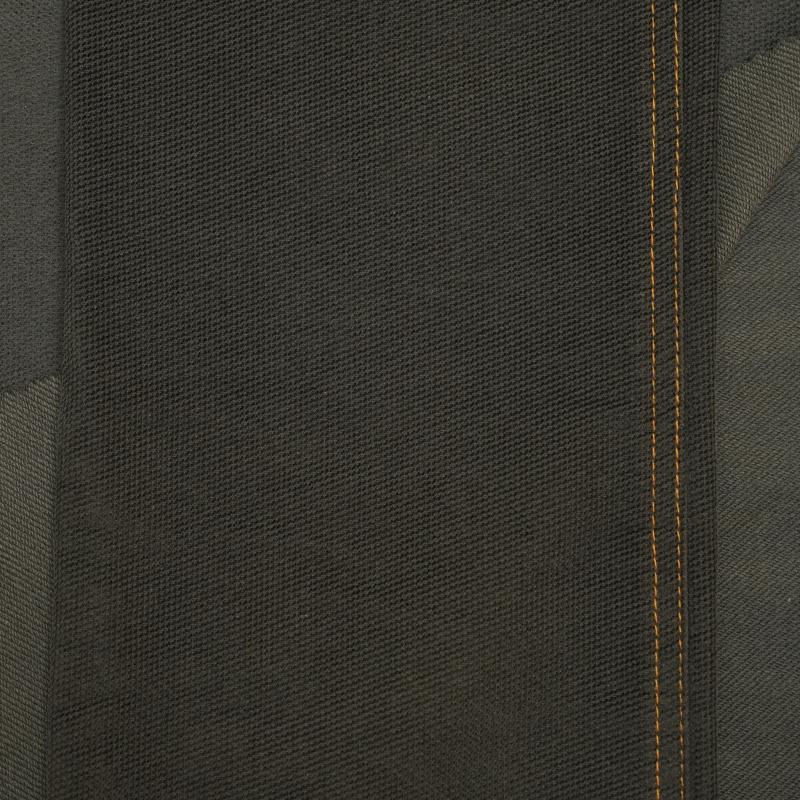
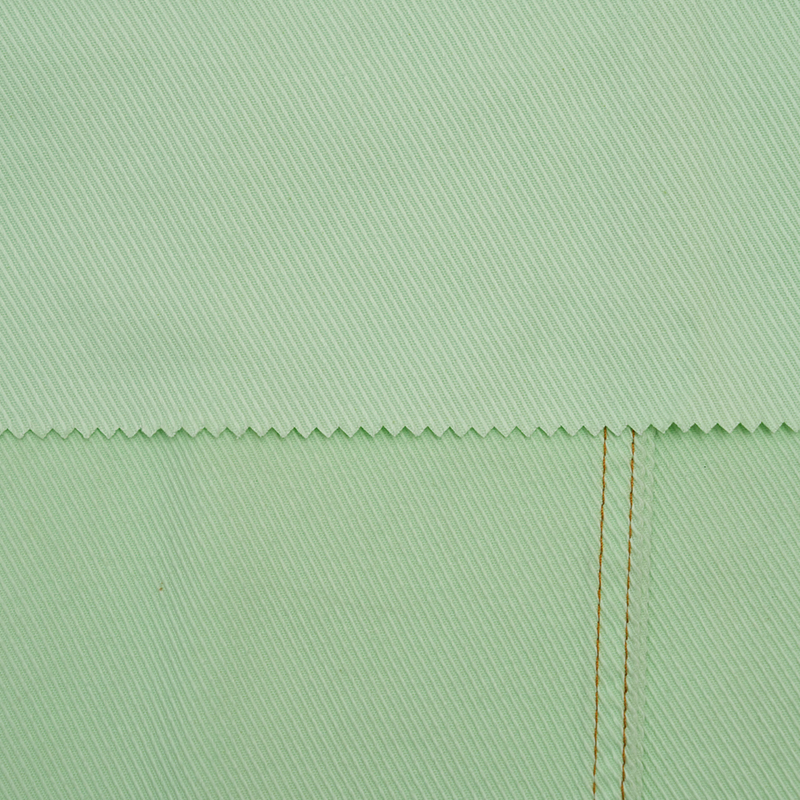 GS2300 All Cotton Cavalry Slant Dyed ClothA 100% cotton cavalry twill at 285 GSM, supplied PFD for garment-dye programs, letting finished uniforms and outerwear take a level, uniform shade after dyeing.View Product →
Where comfort stretch matters, the super-stretch cotton-modal twill GS1742D pairs the durability of the diagonal with four-way give and a softer hand, a combination suited to fitted trousers and jackets.
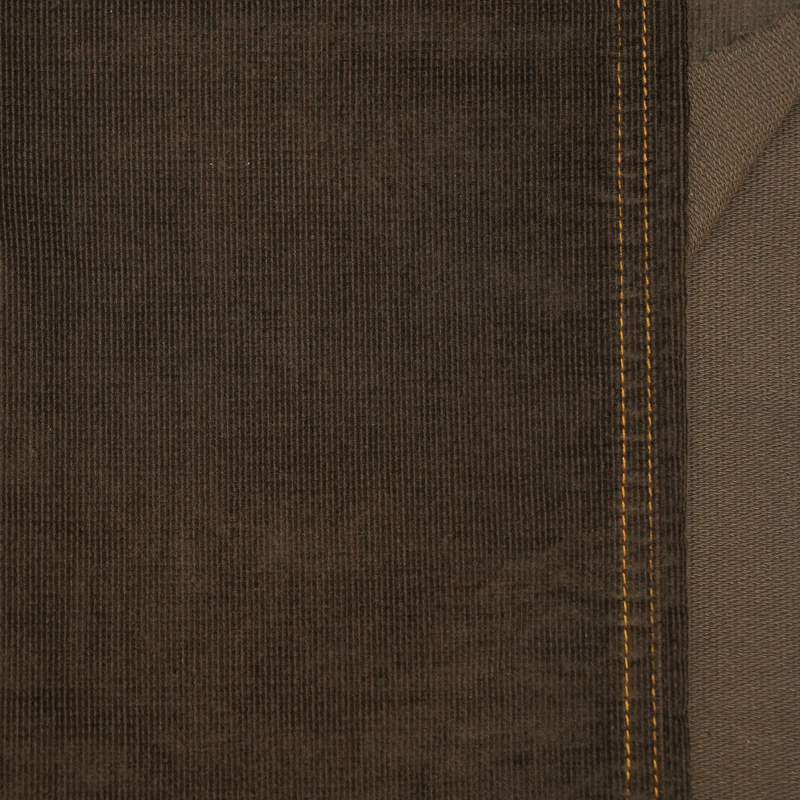
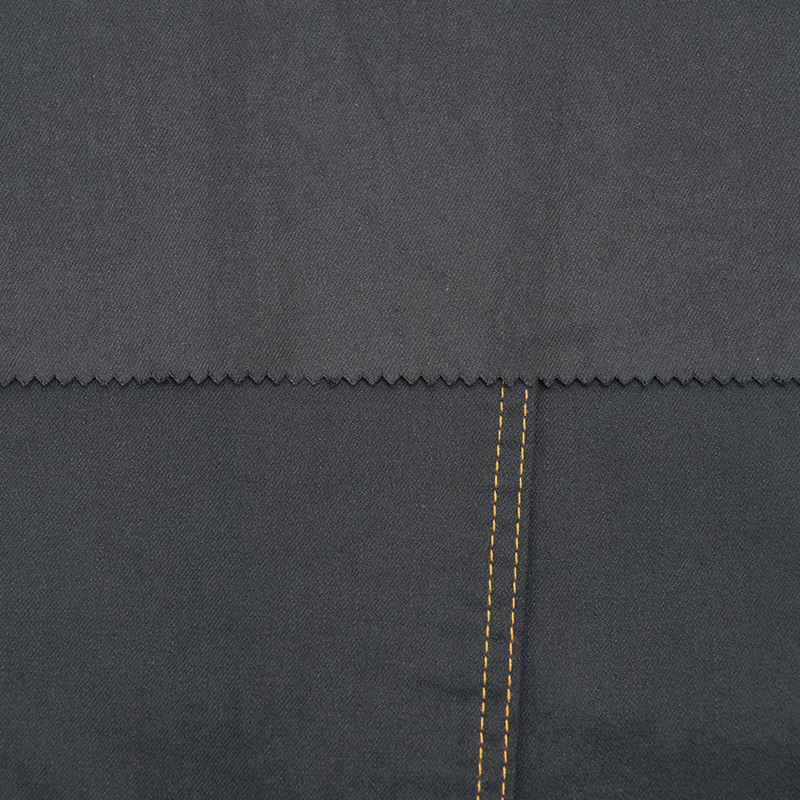 GS1742D Super Stretch Cotton-Modal Twill Dyed ClothThis 63% cotton and 30% modal twill with spandex offers four-way stretch, a softer hand, and 290 GSM durability suited to fitted trousers and jackets.View Product →
For fluid shirting and dresses, cotton-tencel twills such as GS17065B bring lyocell's drape together with cotton's body and take piece dyeing to a deep, even shade.
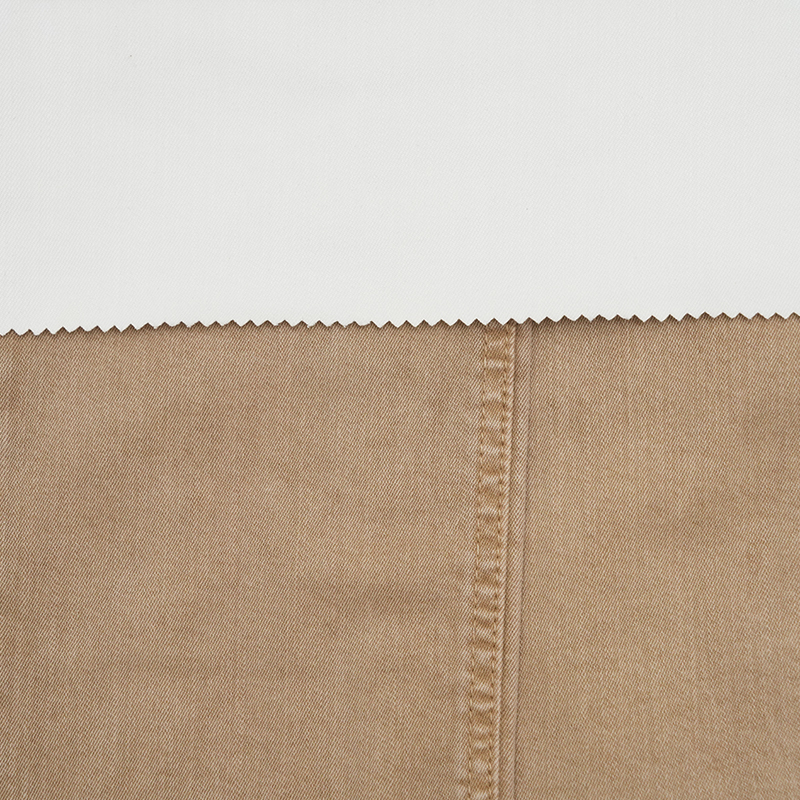 GS17065B Cotton-Tencel Twill Dyed ClothBlending Tencel's drape with cotton's body in a 290 GSM twill, this fabric takes piece dyeing to a deep, even shade for fluid shirting and dresses.View Product →
The practical takeaway is to match construction to end use. A 3/1 warp-faced drill will outlast a poplin in the same yarn but costs more per meter and snags more readily; a 2/1 twill trades a little ruggedness for a softer face; a steep gabardine line delivers the crisp surface that tailoring depends on. Fix the ratio, density, dyeing route, and face direction on paper before sampling, then judge the hand on the actual cloth rather than the description. Do that, and the diagonal, weaving's oldest durability trick, will carry the load exactly as it has for centuries.
Related Products

-

- Address: No.8 Longxuan Road, Lijia Town, Wujin District, Changzhou, China
- Phone: +86-13301509168
- Email: [email protected]
- BE THE FIRST TO KNOW
- For exclusive deals and latest offers, sign up by entering your email address below.
- QUICK LINKS
RELATED CERTIFICATIONS: