English
 中文简体
中文简体 Tiếng Việt
Production of various high-end fabrics reaches 7 million meters annually, including a wide range of fashionable new products and exquisite items, with a broad coverage of color patterns.

Knot Defect in Fabric: Causes, Grading Tolerances, and Mill Prevention
2026-09-23
Content
A black 11-wale cotton corduroy roll, 1.5 m wide and 60 m long, is opened for inspection. In the first two metres, the inspector finds four hard specks sitting above the pile, each roughly 1.2 mm across. They do not rub off. Under a pick glass they show as tight, tangled fibre balls, and because the fabric is dyed black, they read as pale pinpricks against the nap.
That is the knot defect in fabric: a physical mass of entangled fibre, or a literal yarn knot, thicker and harder than the yarn it sits in. Knots are formed before dyeing, mostly during fibre preparation and spinning, and occasionally at the loom when a broken end is hand-knotted instead of spliced. Dyeing only decides whether they appear as light or dark dots; it neither creates nor removes them. So the practical question for a buyer is not whether a roll contains knots, but which sizes, and how many per 100 square yards, are allowed before the roll is downgraded.
What a Knot Defect Looks Like, and What It Is Not
A knot defect reads as a small, dense lump on the fabric surface. In cotton and cotton-blend woven goods it usually measures 0.3 mm to 3 mm, occasionally more. Because the tangled mass is denser than the surrounding yarn, dye liquor penetrates it differently: on black, navy, and deep olive shades it shows as a white or grey speck; on pale shades it may appear as a slightly darker dot, especially when seed-coat fragments are trapped inside.
- Nep or knot: pinhead-sized tangled fibre, hard to the touch, resistant to dye penetration.
- Slub: a thicker yarn segment running several millimetres along the yarn; softer, longer, and sometimes intentional.
- Thick place: a periodic diameter variation from drafting, usually longer and less dense than a knot.
- Physical yarn knot: an actual knot tied at a warp or weft break; 2 mm to 5 mm, hard, and a snag risk on raised fabrics.
The distinction matters because the fixes differ. A nep points to fibre and carding conditions; a physical knot points to splicing practice on the loom. On corduroy and other pile fabrics, a knot sitting in the pile stands proud of the surface, abrades differently from the nap, and becomes far more visible after brushing and dyeing. That is why pile fabrics and piece-dyed dark shades carry the highest rejection risk for this defect.
Where Knots Are Born: Gin, Card, Comber, Loom
Fibre preparation and spinning
Most knots start with the raw material. Immature fibres, low micronaire, high short-fibre content, and seed-coat fragments all increase nep formation, and neps that survive carding rarely disappear later. Key checkpoints sit at several stages:
- Raw cotton: micronaire and maturity, trash content, and short-fibre content below the agreed limit.
- Carding: wire condition, cylinder speed, and flat settings; worn card clothing is a common source of neps.
- Combing: comber noil extraction rate; dark shades usually justify combed cotton.
- Yarn clearing: electronic clearers must be set to cut nep-type faults, not just thick places.
Mill climate also matters. Running a spinning room at high temperature with low relative humidity lowers yarn strength and raises end breakage, and every break is an opportunity for a knot or a piecing fault to enter the yarn.
Weaving and loom room
At the loom, a broken warp end or weft has to be joined. Air splicing produces a joint close to the parent yarn; a hand-tied knot produces exactly what the name suggests, a visible 2 mm to 4 mm lump that survives dyeing and finishing. Weaving rooms should therefore specify splicing, log every warp stop, and hold relative humidity around 65-75% at 24-28 °C to keep warp tension stable. Loose reed settings and worn weft accumulators add their own marks, which inspectors often misread as knots.
Why Knots Cost Money: Downgrade, Cut Loss, and Claims
The financial damage from knots is rarely the defect itself; it is the classification and the argument that follows. A hard knot larger than 3 mm in a garment panel can force the marker to shift, raising fabric consumption by a measurable percentage. A cluster of pale specks in a dyed black roll invites a claim even when the roll technically passes a point count.
Most woven-fabric inspections use the 4-point system: a defect up to 3 inches scores 1 point, over 3 to 6 inches scores 2, over 6 to 9 inches scores 3, and anything longer scores 4. First quality is commonly set below 20 points per 100 square yards. The gap is that the 4-point system measures length, while knots and neps are measured by diameter. Unless the purchase order writes size bands, the mill and the buyer are grading against different definitions.
| Knot or nep condition | Downstream impact | Usual inspection treatment |
|---|---|---|
| Embedded nep under 1.0 mm | Cosmetic only in most shades | Minor; often not scored individually |
| Knots 1.0 mm to 3.0 mm, scattered | Visible specks after dark dyeing; possible B-grade | Counted per 100 square yards against a written limit |
| Knot clusters in one band | Marker shift, extra cut loss | Often fails the roll even if total points pass |
| Hard physical knot over 3.0 mm | Snag, pile disturbance, hole risk | Zero-tolerance clause in many buyer specs |
Two further clauses reduce disputes. First, a size definition with a measurement method: for example, knots measured with a pick glass at 4x magnification, diameter recorded to the nearest 0.1 mm. Second, a sampling rule: 10% of rolls per dye lot, minimum one roll, with three full-width pieces taken from head, middle, and tail.
Inspecting for Knots Without a Laboratory
- Set illuminance at 1000-1200 lux on the inspection surface, and add a grazing light for pile fabrics so raised knots cast a shadow.
- Inspect at roughly 1 m for general defects and 0.5 m for critical dark shades, keeping the viewing angle near 45 degrees.
- Sample at least 10% of rolls per dye lot, with a minimum of one roll, and cut one-yard, full-width pieces at head, middle, and tail.
- Count knots inside a defined frame of one square yard and record them in size bands: above 1.0 mm, above 1.5 mm, and above 3.0 mm.
- Photograph each class with a ruler in frame at 4x, and keep a signed physical swatch as the reference standard for both parties.
A 30-roll lot sampled this way produces enough data to see a trend before shipment, which is far cheaper than sorting the issue out after the goods reach a cutting room.
Prevention and Specification Language That Works
The most effective controls sit upstream. Fibre selection, card maintenance, comber settings, and electronic yarn clearing determine whether neps enter the yarn at all; splicing practice and loom-room climate determine whether physical knots are added at weaving. On the finishing side, singeing or gassing reduces surface nep on flat woven fabrics, though it does less for corduroy, where the pile is the point of the construction.
For pile fabrics, the buyer's leverage is in the purchase order. A workable clause reads: neps and knots over 1.5 mm, maximum 8 per 100 square yards; hand-knotted ends, zero tolerance, with all yarn joins air-spliced; any single hard knot over 3.0 mm, roll rejected. Add the shade context, because the same roll that passes in oatmeal can fail in black. Buyers ordering dyed corduroy fabric in deep shades often tighten the limit to 5 per 100 square yards for exactly this reason.
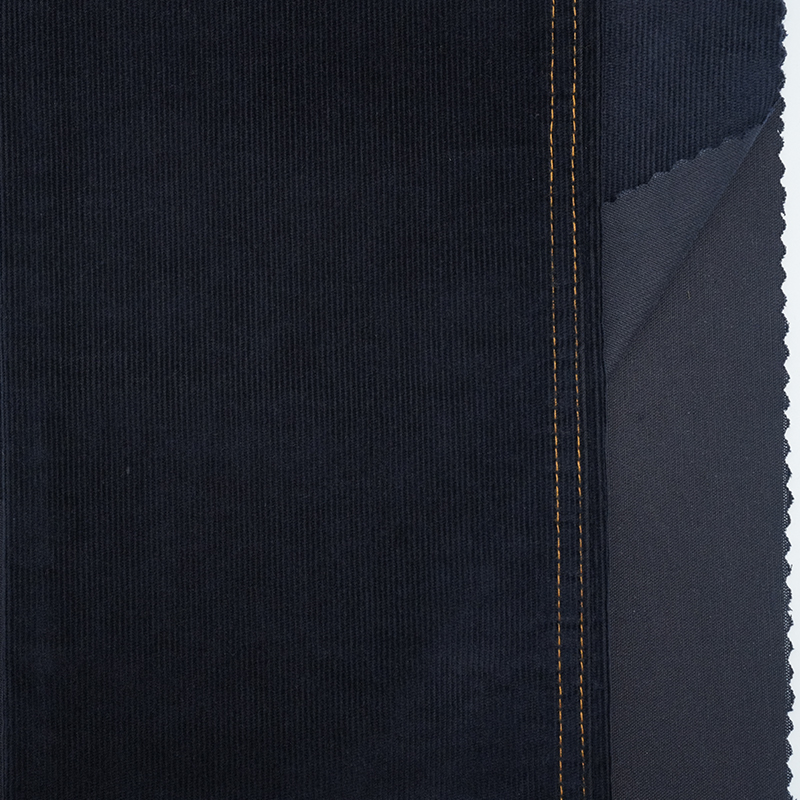
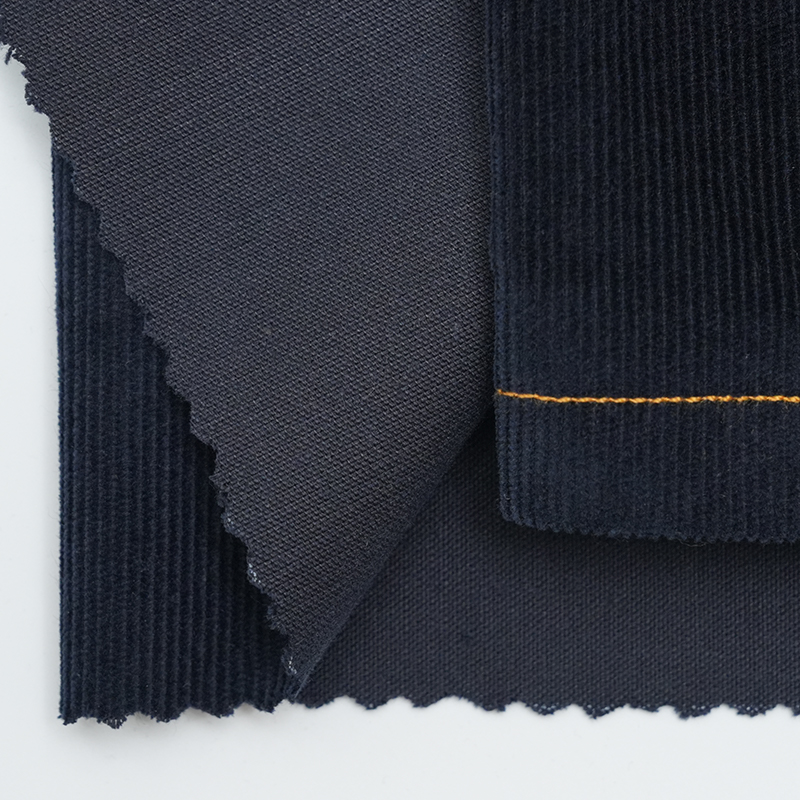 GS1155 14W GRS Cotton Corduroy Dyed FabricOur 14W GRS Cotton Corduroy Dyed Fabric offers the perfect blend of eco-consciousness and premium quality. This fabric is composed of 78% cotton, 20% recycled cotton, ...View Product →
It also helps to define what the mill is expected to deliver before the loom. On cotton corduroy, comber-grade cotton with controlled short-fibre content and a documented nep count per kilometre of yarn gives both sides a number to work with, rather than an opinion formed under an inspection lamp.
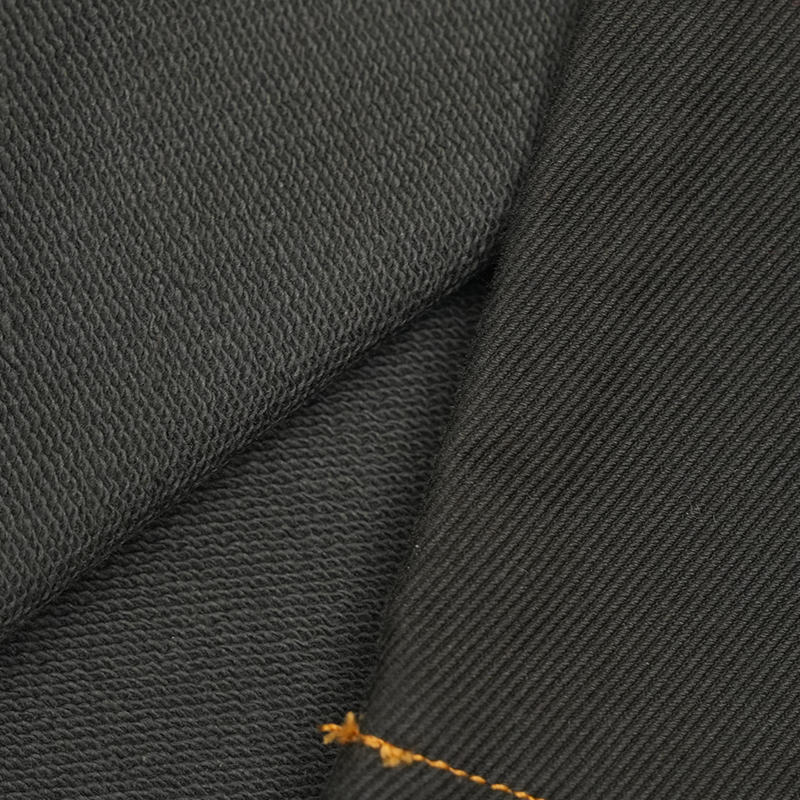 GS1158 Cotton-13%Modal Double Corduroy Dyed FabricOur Cotton-13% Modal Double Corduroy Dyed Fabric is a premium textile renowned for its exceptional comfort, durability, and aesthetic appeal. Carefully constructed wit...View Product →
For piece-dyed and prepared-for-dyeing programmes, the same logic applies one step earlier: greige quality sets the ceiling on what finishing can fix. Buyers who specify nep and knot limits on the greige, and who use control tests that catch knot defects early, generally see fewer claims than those who inspect only the finished roll.
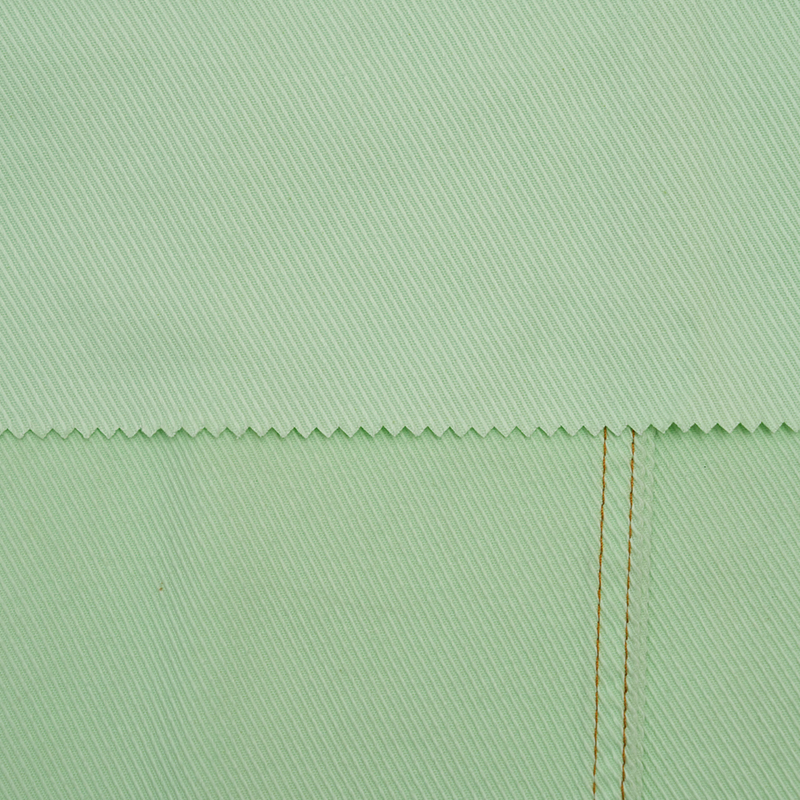 GS2300 All Cotton Cavalry Slanted Dyed ClothOur All Cotton Cavalry Slanted Dyed Cloth is a premium textile product, crafted with 100% high-quality cotton to ensure comfort, durability, and versatility. With a ro...View Product →
When size bands are written into the specification, the conversation at final inspection shifts from argument to arithmetic. Suppliers know exactly what will be counted, and inspection data becomes comparable across lots and across dyehouses.
No fabric is entirely free of neps; the goal is a controlled, measurable level rather than an absolute zero. Define the size bands, the points per 100 square yards, the sampling plan, and the shade categories where limits tighten. Then hold the same standard across every lot. On dark piece-dyed corduroy and similar pile constructions, that discipline is the difference between a routine delivery and a claim.
Related Products

-

- Address: No.8 Longxuan Road, Lijia Town, Wujin District, Changzhou, China
- Phone: +86-13301509168
- Email: [email protected]
- BE THE FIRST TO KNOW
- For exclusive deals and latest offers, sign up by entering your email address below.
- QUICK LINKS
RELATED CERTIFICATIONS: