English
 中文简体
中文简体 Tiếng Việt
Production of various high-end fabrics reaches 7 million meters annually, including a wide range of fashionable new products and exquisite items, with a broad coverage of color patterns.

Moire Fabric Explained: How the Watered Silk Finish Is Made and Sourced
2026-09-30
Content
A buyer approves a 30-metre sample of black cotton-rayon for eveningwear under office lighting, then rejects the bulk three weeks later because the same cloth reads flat grey in daylight. Nothing changed in the dye bath. What changed was the finish that produced the wavy, watered surface the buyer thought they were paying for.
Moire is one of the few qualities where the look is carried neither by the fibre nor by the dye, but by how the cloth is finished or how it is woven. That makes it easy to buy badly and slow to inspect on a table. What follows covers what moire fabric is, how the watered surface is produced, which fibres hold it best, and which numbers belong in a purchase order before a loom starts running.
What Is Moire Fabric?
Moire fabric is a woven cloth whose face carries a wavy, watered pattern that shifts as the viewing angle changes. The effect comes from a finish or a weave, never from a fibre, which is why the same cotton quality can look plain in one delivery and iridescent in the next.
Moire fabric: a woven cloth with a rippled, water-like surface produced by controlled distortion of the weave. It describes a surface character rather than a fibre type, so base construction, finishing method and care instruction all matter more than the material name on the label.
Historically the finish was worked on silk failles and grosgrains. The cloth was moistened, folded and run through hot rollers, a process called watering or calendering, and it stayed costly enough to remain a formalwear and furnishing staple for centuries. Woven moire came later, when mills learned to build the same rhythm into the interlacing using silk with linen or cotton.
One clarification saves a lot of email. Outside textiles, moire also describes an optical interference pattern that appears when two fine grids overlap, in printing or in a scan. In cloth the word covers a deliberate, controlled surface effect, and the woven version, built from particular combinations of woven fabric types and yarns, holds up where a calendered one flattens.
How Moire Is Made: Calendering and Woven Structure
There are two commercial routes to a moire surface. A calendering finish is applied to cloth that has already been woven; a woven structure carries the ripple in the interlacing itself. The first is cheaper to develop, the second is much harder to damage.
Calendered moire
A plain or fine-rib weave, often faille or taffeta, is conditioned to a controlled moisture level and passed between heated rollers under heavy pressure. Fibres flatten unevenly and the face bends light in bands.
- Lowest development cost
- Sharpest, most liquid shimmer
- Can dull with heat, steam and abrasion
Woven moire
A dobby or jacquard loom builds the ripple into the cloth, so no post-treatment is needed. The pattern survives washing, pressing and abrasion, at the cost of loom time and design work.
- Permanent surface effect
- Repeatable from lot to lot
- Higher weaving cost and minimums
Calendered moire is a finish that can be lost. Woven moire is a structure that will not be. Choose between them by how the garment will be cleaned and pressed, not by how the sample photographs.
Base cloth
A plain or fine-rib weave is desized, scoured and dyed to shade.
Conditioning
Moisture is returned to a controlled level so the fibres soften evenly instead of cracking.
Calendering
The cloth passes through heated rollers under pressure, and the rib distorts into light-bending waves.
Setting and inspection
The roll cools and relaxes, then ripple direction, hand feel and shade are checked across the run.
When the ripple has to be written into the cloth rather than pressed onto it, a dobby construction is the practical starting point for most apparel programmes.
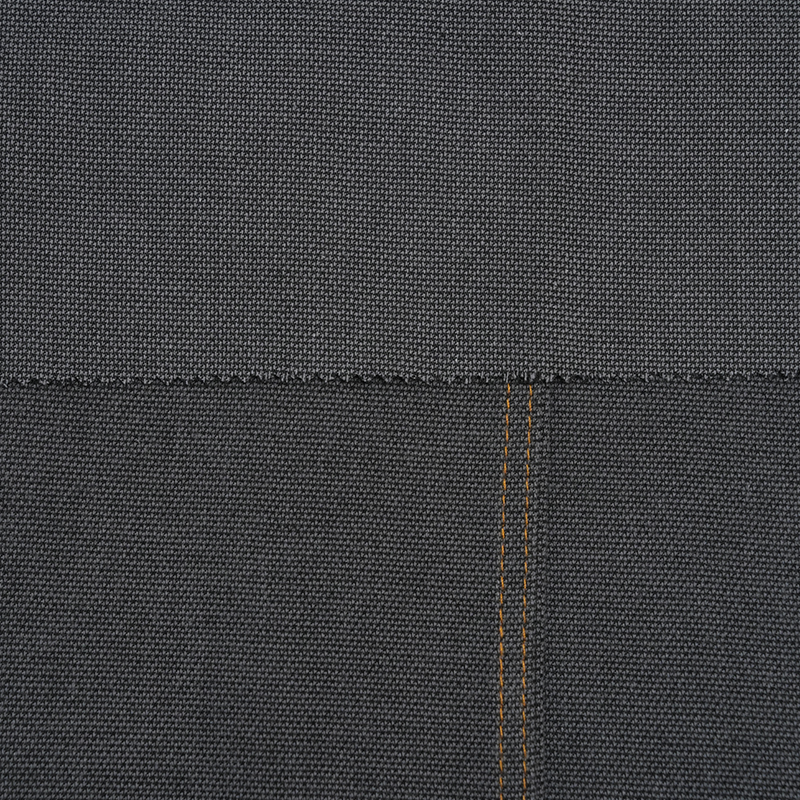 GS20183 Rayon-Cotton-Poly Dobby Dyed ClothRayon-Cotton-Poly Dobby Dyed Cloth, a versatile fabric designed to meet the demands of modern textile applications. This high-quality fabric features a meticulously cr...View Product →
Which Fibres and Blends Hold a Watered Finish
Filament silk takes a moire finish most sharply, but a lustrous cellulosic blend such as viscose-cotton, modal-cotton or lyocell-cotton is the practical answer for most production runs, because it holds the ripple at a fraction of the cost.
| Fibre | Lustre | Response to moire | Typical end use |
| Filament silk | High | Sharpest ripple, deepest colour movement | Eveningwear, millinery, ribbon, upholstery |
| Viscose (spun rayon) | High | Strong ripple with a soft hand | Dresses, linings, scarves |
| Modal and lyocell blends | High | Good ripple, better wet strength than viscose | Shirts, jackets, home textiles |
| Cotton | Low to medium | Softer effect; needs mercerised or lustrous yarn | Casual jackets, home textiles |
| Wool and wool blends | Medium | Deep, matte ripple | Suits, coats, upholstery |
| Polyester | High | Crisp ripple that can read synthetic | Uniforms, contract furnishing |
Sheen belongs to the fibre; ripple belongs to the finish. A dull cotton will never shimmer like silk, however hard the calender runs, but a mercerised cotton-viscose gets close enough for most commercial ranges.
Lustrous blends are where most moire programmes begin, because hand feel usually decides the order.
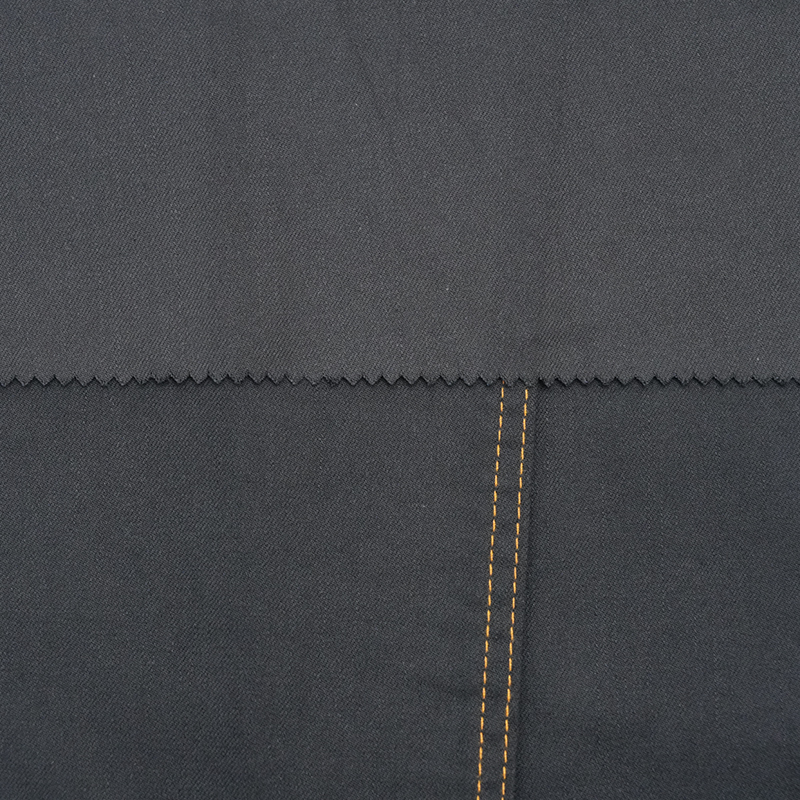 Modal-cotton Dyed Cloth SuppliersQuick View GS1742D Super Stretch Cotton-Modal Stretch Twill Dyed ClothView Product →
Specs and Tolerances to Fix in the Purchase Order
Five numbers belong in the PO before sampling: base construction, moisture at calendering, roller temperature, ripple direction, and the tolerances you will accept on weight and shade.
8 to 12 %Moisture regain before calendering
90 to 140 CTypical roller temperature range
+/- 5 %Finished weight tolerance per roll
- Base weave, yarn count and finished width.
- Ripple direction relative to the selvedge, and whether every panel must match.
- Weight and width tolerances written as percentages, not as "as agreed".
- Colour fastness grades for light and rubbing, tested on the finished cloth rather than the greige.
- The care instruction the garment will carry, and whether the fabric must survive pressing.
A moire roll is directional. If the cutting room ignores the wave direction, seams read as a shade change rather than an angle change. Mark an arrow on every roll end before it leaves the inspection table.
Quality Checks Before Bulk Production
Inspect moire under the light it will live in and at the angle it will be worn. Most claims are not defects at all, but mismatched expectations about direction and pressing.
| Symptom | Usual cause | What to check |
| Flat band across the width | Cold spot or worn roller, or a crease during calendering | Compare both selvedges and the centre of the same metre |
| Ripple fading after pressing | Too much heat and steam on a calendered finish | Press a sample at the garment maker's settings before bulk |
| Shade shift between rolls | Dye lot change | Keep one reference swatch for every lot |
| Uneven ripple along one edge | Tension difference across the loom width | View the roll in transmitted light, not only on the table |
Run the finish through the garment maker's own pressing settings before bulk. Thirty seconds of steam and a five-second press cost almost nothing and prevent most moire returns.
Sourcing Moire From a Woven Mill
Moire is easiest to source from a mill that controls weaving and finishing under one roof, because the surface depends on how the two interact.
Changzhou Huiya Textile is a woven fabric mill in Changzhou, Jiangsu, with roughly seven million metres of annual capacity and lines covering spinning, weaving, dyeing and finishing. Its range includes cotton blended dyed fabric in modal-cotton, viscose-cotton and lyocell-cotton qualities, plus cotton and cotton-blend corduroy, prepared-for-dyeing cloth for garment dyeing, and coated dyed cloth, with GRS-certified recycled cotton options on selected articles.
Send the pressing and washing conditions the garment will meet with the first enquiry. A mill that knows the cloth will be steamed twice before retail can choose base weave and finishing route accordingly.
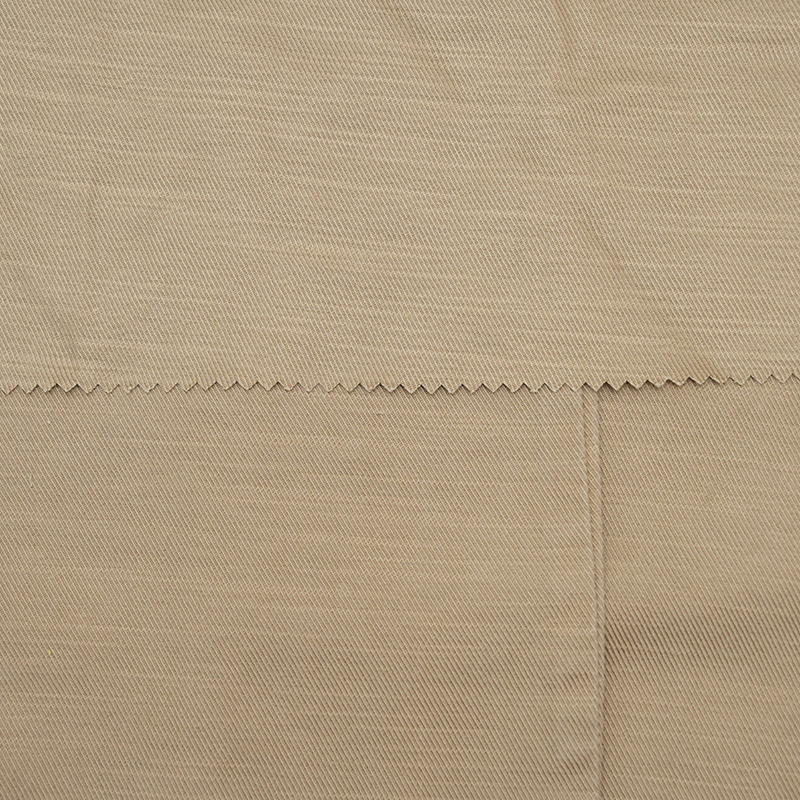 Rayon-cotton Dyed Cloth SuppliersQuick View GS1802 Tretch Dyed Cloth For Warp And WeftView Product →
Bring three things to the first enquiry: the base weave you want, the care conditions the garment will meet, and the light the shade will be sold under.
Frequently Asked Questions
Is moire fabric a type of fibre?
No. Moire is a surface character produced by a finishing process or by a woven structure. Silk, viscose, modal, cotton, wool and polyester can all be given a moire look, and the fibre only decides how sharp and how durable that look will be.
Can moire be made from cotton instead of silk?
Yes, and most commercial moire today is cellulosic. A lustrous cotton blend or a mercerised cotton takes the ripple well enough for jackets, shirts and home textiles, though it will not match filament silk for depth of colour movement.
Does moire fabric wash well?
A calendered moire is the fragile version. Dry cleaning is safest, and if you do wash it, use cool water, avoid wringing and never press the surface directly with a hot iron. Woven moire tolerates the normal care of its base fibre because nothing has to be preserved on the surface.
Is moire the same as an optical moire pattern?
They share a name and a visual rhythm, not a production method. In textiles, moire names the finished watered cloth. In printing, scanning or photography, the same word describes an interference pattern created when two fine grids overlap.
Related Products

-

- Address: No.8 Longxuan Road, Lijia Town, Wujin District, Changzhou, China
- Phone: +86-13301509168
- Email: [email protected]
- BE THE FIRST TO KNOW
- For exclusive deals and latest offers, sign up by entering your email address below.
- QUICK LINKS
RELATED CERTIFICATIONS: