English
 中文简体
 Tiếng Việt
Production of various high-end fabrics reaches 7 million meters annually, including a wide range of fashionable new products and exquisite items, with a broad coverage of color patterns.

Human Made Fiber Explained: Types, Dyeing Behaviour and Mill Sourcing Checks
2026-11-19
Content
Two swatches sit side by side on the table: same weight, same shade, almost the same handle. One is 100% cotton, the other is 68% cotton with 32% modal. The second costs roughly a tenth more per metre, takes dye deeper, and drapes like a fabric twice its price, but it also shrinks on a different curve after five home washes. Nothing separates them except a human made fiber buried in the blend line of a specification sheet.
That is usually where cost arguments, shade approvals and returns begin. Human made fibers now account for close to two thirds of global fibre production, yet plenty of tech packs still describe them with a single word, such as viscose, polyester or modal, and leave the sub-type, the dye class and the blend tolerance unstated. Those three gaps cause most of the disputes that land on a mill's desk after bulk delivery.
About two thirds Share of global fibre output that is manufactured rather than harvested
12.5% Typical moisture regain of modal, against roughly 0.4% for polyester
60 C Common reactive dyeing temperature for regenerated cellulosic wovens
What a human made fiber actually is
A human made fiber is any textile fibre that is manufactured rather than harvested: the fibre-forming substance is dissolved, melted or extruded into filaments, then cut, texturised or woven into fabric.
The wording trips people up. Trade documentation, search terms and even mill quotations mix "human made fiber", "man-made fiber", "manufactured fibre" and "artificial fiber", and all of them point at the same category. The confusion starts when "man-made" is used as shorthand for synthetic only, which quietly excludes viscose, modal and lyocell, even though they are manufactured too.
Definition: a human made fiber is produced from a fibre-forming substance that does not exist as a usable textile filament in nature, either by re-spinning a natural polymer such as cellulose, or by polymerising monomers into a new chain.
Production falls into three groups, and the group determines almost everything a buyer later measures in the lab:
- Regenerated cellulose: viscose, modal, lyocell and acetate, all rebuilt from wood pulp or cotton linters.
- Synthetic polymers: polyester, nylon, acrylic and elastane, built from petrochemical or bio-based monomers.
- High-performance and inorganic: aramid, glass, carbon and modacrylic, specified for heat, flame or tensile requirements rather than hand feel.
The commercial reason to get the naming right is labelling. Most markets require a generic fibre name on the care label and on customs paperwork, so "Tencel" or "Lycra" alone will not clear an inspection; the generic name must sit alongside the brand. A spec sheet that skips the generic name usually skips the test method as well.
Regenerated and synthetic fibers behave like different materials
Regenerated and synthetic fibers share one label but behave like different materials, because one is rebuilt from a natural polymer and the other is built from monomers.
That difference surfaces in the dye bath, in the wash test and in the hand feel after three laundering cycles. A buyer comparing quotations on price per metre alone will usually discover it in a shrinkage report.
| Property | Regenerated cellulosic | Synthetic polymer |
| Base material | Wood pulp or cotton linters | Petrochemical or bio-based monomers |
| Typical examples | Viscose, modal, lyocell, acetate | Polyester, nylon, acrylic, elastane |
| Moisture regain | Roughly 11 to 13 percent | Below 1 percent, except nylon at about 4 percent |
| Main dye class | Reactive and direct dyes | Disperse dyes, often above 120 C |
| Wet strength | Falls sharply when saturated | Largely unchanged when wet |
| Heat response | Stable but sensitive to caustic soda | Thermoplastic, takes permanent pleats |
Specify regenerated when
The brief asks for drape, a soft dry hand, deep reactive shades, breathability next to skin, or a story about plant-based feedstock. Expect tighter care instructions and a longer shade-approval loop.
Specify synthetic when
The brief asks for wrinkle recovery, dimensional stability, abrasion resistance, quick dry performance or a lower landed cost. Expect lower moisture uptake and a different fastness profile.
A blend line reading 65/35 polyester cotton tells you almost nothing about performance. The sub-type, the spinning route and the dye class control hand feel and fastness, not the headline ratio.
How human made fibers behave in the loom and the dye bath
Regenerated cellulosics take the same reactive dyes used on cotton but absorb them faster, so shade consistency depends on controlled exhaustion rather than on the choice of dye.
In practice that means a viscose or modal warp needs a slower ramp, a tighter salt schedule and closer pH control than a cotton warp of the same count. Mills that run both on the same line without adjusting the recipe usually see two to three points of shade variation between the first and last beam.
Viscose 13%
Modal 12.5%
Lyocell 11.5%
Cotton 8.5%
Polyester 0.4%
Moisture regain is the number behind most comfort claims, and it also drives dye bath behaviour, drying time and dimensional change after washing. Lyocell adds a second variable: fibrillation, where the surface splits into micro-fibres under wet abrasion, which can be a design feature in a peach finish or a defect in a clean twill.
Wet strength is the hidden spec. Viscose loses roughly half its dry tenacity when saturated, which is why a 100% viscose warp needs different sizing, tension and drying from a cotton warp of the same yarn count.
For dye class selection across fibre families, matching dye classes to fibre types is worth reading before approving a lab dip, since a single wrong class can leave a two-tone blend that no leveling agent will fix.
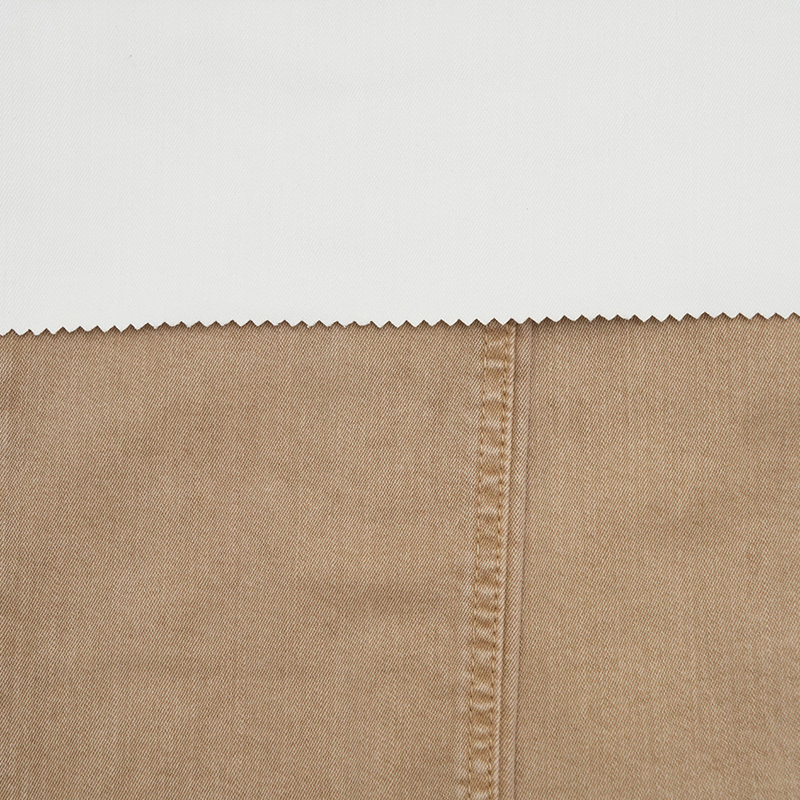 Cotton-Tencel Twill Dyed Woven ClothA cotton-Tencel twill that pairs dimensional stability with dye depth; check its blend and fastness data before approving a lab dip.View Product →
Cotton-lyocell twills are a good example of how the two fibres cooperate: the cotton carries dimensional stability while the regenerated component lifts the dye depth and softens the hand. The trade-off is that both components need compatible fastness data, not just an average.
Sourcing checks before you approve bulk
Ask for the generic fibre name, the sub-type, the blend tolerance and the dye class in writing before approving bulk, because verbal confirmation is not a specification.
These five checks catch most of the problems that appear after the first bulk shipment, and none of them requires a laboratory to start:
- Confirm the generic name and the sub-type. "Viscose" and "modal" are different fibres with different wet strength, and the sub-type belongs in the contract, not in an email footnote.
- Fix the blend tolerance and the test method. Most woven blends are quoted at plus or minus three percentage points, but the number is meaningless unless the test method is named.
- Request dye class and fastness data together. Wash, rub and light fastness should arrive as a set, measured on the finished fabric rather than on the greige.
- Check shrinkage after three washes at the declared care label temperature. A regenerated blend that measures well at 30 C can move two full points at 40 C.
- Verify certification scope. Recycled content claims need a transaction certificate covering the actual shipment, not a general statement about the mill's capability.
Why mills blend human made fibers with cotton
Blending a regenerated cellulosic with cotton is the cheapest way to add drape, lustre and dye depth to a woven construction without giving up cotton's dimensional stability.
Common ratios sit between 30 and 50 percent regenerated content. Below 30 percent the hand change is barely measurable; above 50 percent the fabric starts behaving like a regenerated cloth, which means more care in washing, more relaxation shrinkage and a different seam stability profile on the sewing floor.
Dyeing is where the blend becomes commercial work rather than a nice idea. Cotton and modal both take reactive dyes, so a union shade is achievable in one bath, but polyester in the same blend needs disperse dyes at a much higher temperature, and the cotton component will yellow unless the sequence is planned properly.
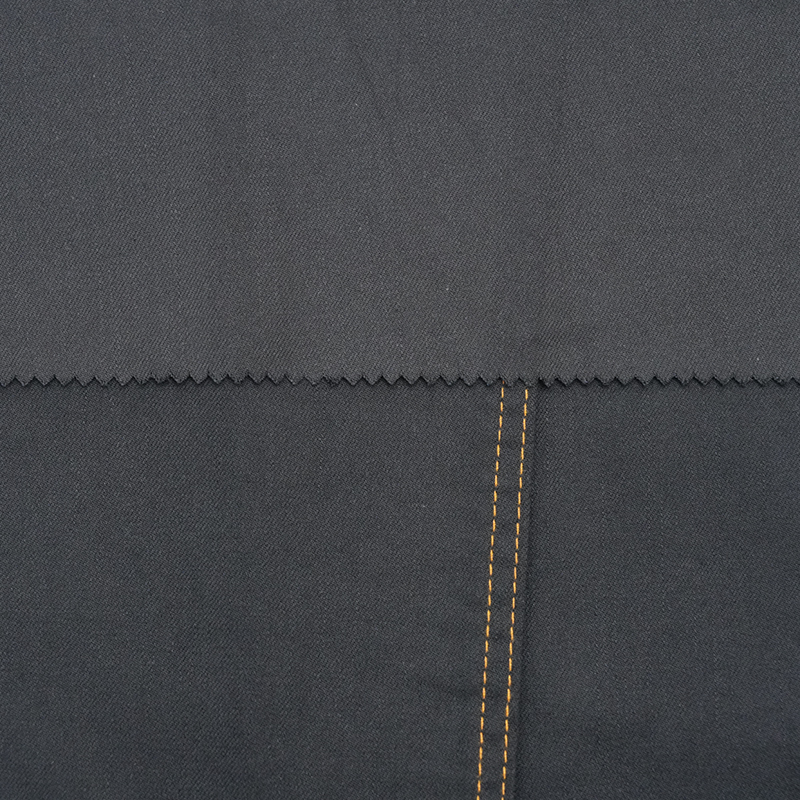 Super Stretch Cotton-Modal Twill Dyed ClothA 63% cotton/30% modal stretch twill with spandex; review the blend ratio and dyeing sequence for drape, recovery, and union shade planning.View Product →
Every point of regenerated fibre added to a cotton blend buys drape and dye depth, and costs dimensional stability. The ratio is a design decision, not a rounding error.
Stretch versions add a third variable. Elastic yarns are usually set during finishing, and the heat history of a modal-cotton twill has to be matched to the elastane so the fabric does not lose recovery after the first wash.
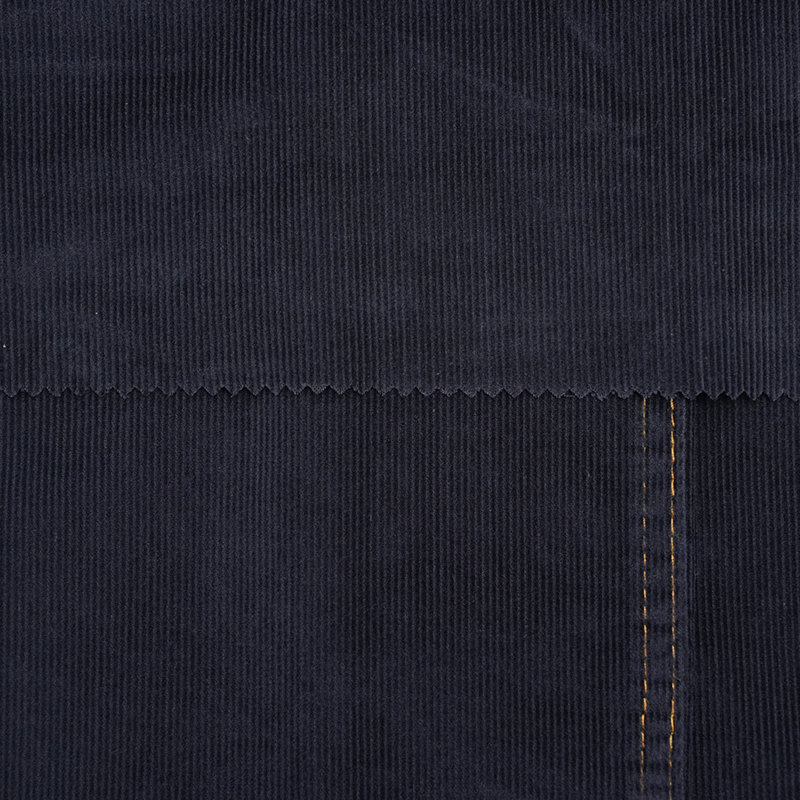
 Extra Elastic Spun Rayon Twill Dyed ClothA cotton-rich rayon twill with 2% spandex; consider its elastane heat history and integrated spinning-to-dyeing setup when planning stretch samples.View Product →
Where the supply chain is vertically integrated, from spinning through weaving to dyeing, the blend ratio can be adjusted close to the loom rather than re-sourced as a finished roll. Buyers who want to see how that is set up can review the mill's spinning-to-dyeing production setup before scheduling a sample round.
Frequently asked questions
Is human made fiber the same as synthetic fiber?
No. Synthetic fibers are one branch of the family. Regenerated cellulosics such as viscose, modal and lyocell are human made but not synthetic in the polymer sense, because they start from a natural polymer that is dissolved and re-spun.
Is viscose a natural fiber?
No. The cellulose comes from plants, but the filament itself does not exist in nature. Once pulp is dissolved and extruded through a spinneret, the result is a manufactured fiber and must be labelled with its generic name.
Which human made fiber blends best with cotton for woven apparel?
Modal and lyocell are the easiest to run, because they share cotton's reactive dye chemistry and add softness without much change to the finishing route. Viscose delivers similar drape at a lower cost but loses more strength when wet, and polyester enters the blend only when wrinkle recovery or a lower price point outweighs hand feel.
Can human made fiber fabrics be garment dyed?
Yes, provided the mill prepared them for it. A prepared-for-dyeing construction in a cellulosic blend takes reactive dyes evenly, but a cotton-polyester preparation will not reach a single uniform shade, because the two components need different dye classes and different temperatures.
The one-line test for any fibre line on a spec sheet: can the mill name the generic fibre, the sub-type, the blend tolerance and the dye class without checking a document? If yes, the specification is real. If not, it is a placeholder waiting to become a claim.
Related Products

-

- Address: No.8 Longxuan Road, Lijia Town, Wujin District, Changzhou, China
- Phone: +86-13301509168
- Email: [email protected]
- BE THE FIRST TO KNOW
- For exclusive deals and latest offers, sign up by entering your email address below.
- QUICK LINKS
RELATED CERTIFICATIONS: