English
 中文简体
 Tiếng Việt
Production of various high-end fabrics reaches 7 million meters annually, including a wide range of fashionable new products and exquisite items, with a broad coverage of color patterns.

Discharge Printing on Dyed Woven Fabric: Ground Dyes, Blends and Testing for Buyers
2026-11-14
Content
- 1 What Discharge Printing Actually Does to a Dyed Ground
- 2 The Ground Dye Decides Whether the Print Works at All
- 3 Discharge Versus Pigment and Plastisol on Dark Fabric
- 4 Constructions That Carry a Discharge Print Cleanly
- 5 The Checks That Decide a Bulk Discharge Order
- 6 Cost and Cycle Time, in Practical Terms
- 7 Questions Buyers Ask Before Booking a Discharge Run
A buyer approves a 240 gsm cotton twill in dark olive, then asks for a chalky white graphic across the chest. The print house pulls one test print on a spare metre and the white comes out grey-green. The paste was not the problem. The ground shade was, because the fabric had been dyed with a high-fastness reactive that resists reduction, and no print operator can discharge a dye that was never built to break.
4.5is the minimum grey-scale rating most apparel programmes will accept on a discharged area after wash-off; a lower reading usually means the ground dye was only partly destroyed, or only partly washed out.
What Discharge Printing Actually Does to a Dyed Ground
Discharge printing works backwards from most print methods. The cloth is piece dyed first, then printed with a paste that destroys the ground dye where it lands, so the pattern is created by removing color instead of stacking ink on top of it.
Discharge printing is a patterning method in which a piece-dyed fabric is overprinted with a paste containing a reducing agent that destroys the ground dye where it lands, leaving either the undyed cloth, called white discharge, or a second color dyed in the same paste, called colored or illuminated discharge.
Two variants reach production. White discharge leaves the natural cellulose tone, which on cotton reads as a soft off-white rather than a paper white. Colored discharge adds a dye that survives the reducing bath, usually a vat dye applied in its reduced form so it fixes while the ground dye is being destroyed. Both variants need the same three conditions to hold:
- Saturated steam at roughly 102 to 105 degrees Celsius for several minutes, long enough to activate the reducing agent before the paste film dries.
- A thorough wash-off with soaping, because destroyed dye fragments and leftover reducing chemical will otherwise migrate back into the cloth and dull the print.
- A ground shade that was selected for dischargeability at the dyeing stage, not after the artwork is approved.
The reducing agent itself is usually a sulfoxylate or a thiourea dioxide system, and both are aggressive towards cellulose. Over-reduced cloth goes thin and brittle in the printed areas, which is why strength testing belongs in the trial, not in the final inspection.
The Ground Dye Decides Whether the Print Works at All
Dischargeability is a property of the dye molecule, not of the print recipe. Azo-based colors that can be reduced back to colorless fragments discharge well; dyes engineered for very high wet fastness usually cannot.
| Dye class on cotton | Discharge response | What it means for the order |
| Vat | Strong white, clean edges | Also the standard choice for the colored paste in illuminated discharge |
| Sulfur | Very strong white | Watch residual sulfur odor and storage yellowing |
| Azoic (naphthol) | Good white | Limited shade range at the dyeing stage |
| Direct | Good white | Poor wet fastness unless the print is topped afterwards |
| Reactive, high fastness | Usually none, or a weak stain | Must be replaced by a dischargeable range, or the print switches to pigment |
| Pigment | None | The binder film blocks the reducing agent from reaching the dye |
The practical consequence is a conversation that has to happen before the dyeing order is placed. Printers can test a swatch, but they cannot change the chemistry of a ground shade that has already been dyed, and re-dyeing a lot to rescue a print programme costs far more than choosing the right dye class the first time. Our own notes on matching dye classes to fibers cover the same decision from the dyer's side.
Rule of thumb: name the intended print method on the dyeing order. One line on the order sheet, dischargeable ground required, prevents most failed print trials before they are even booked.
Discharge Versus Pigment and Plastisol on Dark Fabric
On dark grounds the real choice is between removing color and covering it. Each route has a different cost structure and a different hand feel.
Discharge
- Hand feel stays close to the base cloth, with no ink film on the surface
- Large solid areas stay soft, which matters on 200 gsm and lighter fabrics
- Fastness follows the ground dye and the wash-off, not a binder
- Limited to dischargeable grounds, and shade matching takes trials
Pigment or plastisol
- Runs on nearly any ground, including polyester and blends
- Bright whites and saturated colors repeat easily from lot to lot
- Adds weight and stiffness, noticeable on lightweight twill and poplin
- Binder and curing add a separate fastness and odor question
The trade is predictable. Discharge buys softness and a worn surface at the cost of dye discipline, while an opaque overprint buys color freedom at the cost of hand feel. On a corduroy with a deep pile, pigment sits in the channels and can look chalky, whereas discharge lifts the pile tips and leaves the valleys darker, which is often the effect the design team actually wanted and could not describe.
Constructions That Carry a Discharge Print Cleanly
Flat, firmly sett cellulosic weaves give the most even result, because the paste has to sit on the surface long enough to reduce the dye without bleeding into neighbouring yarns.
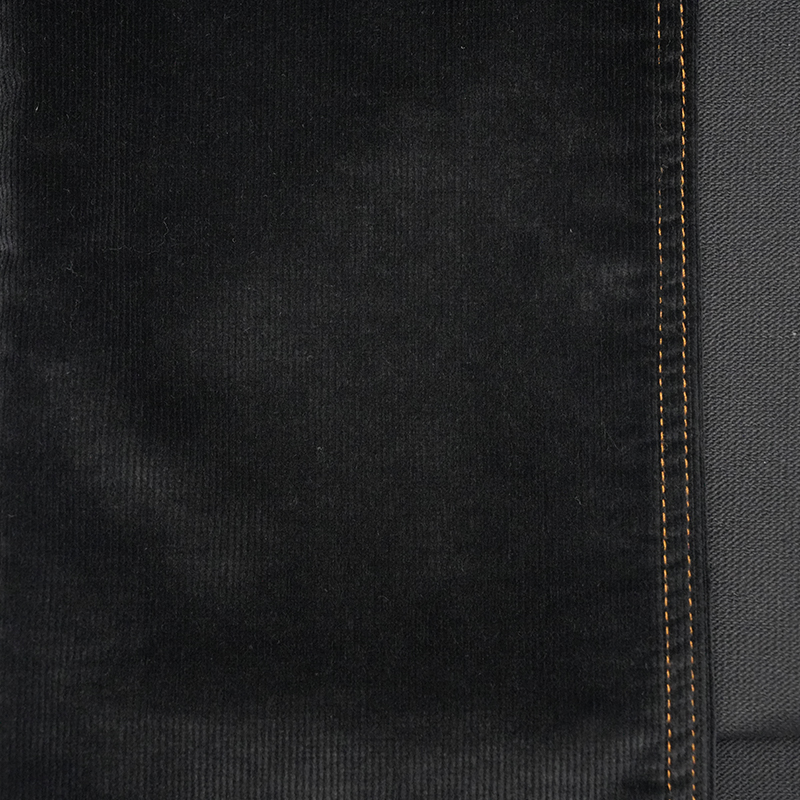
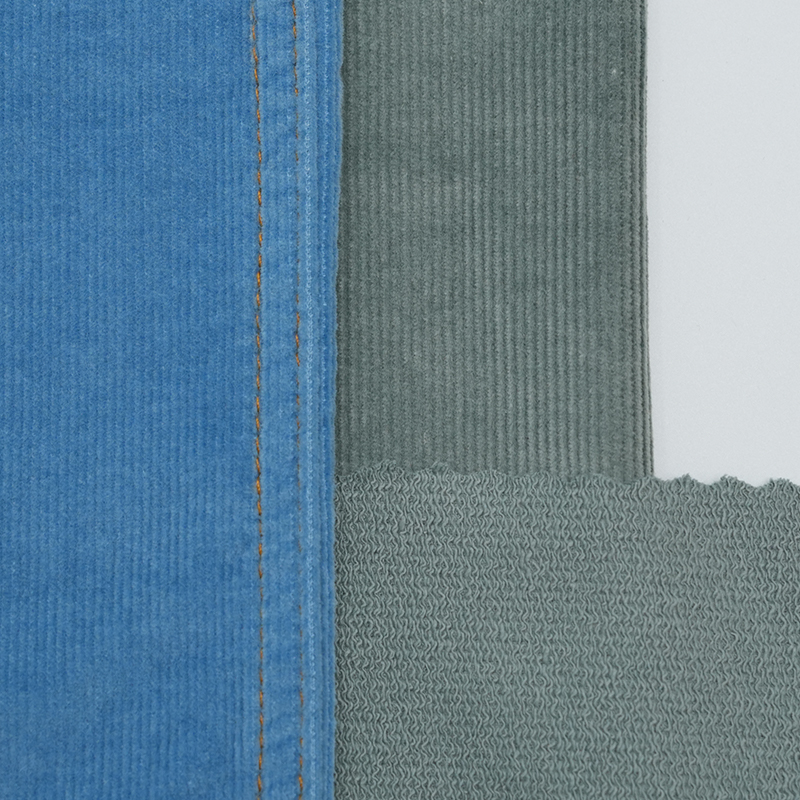
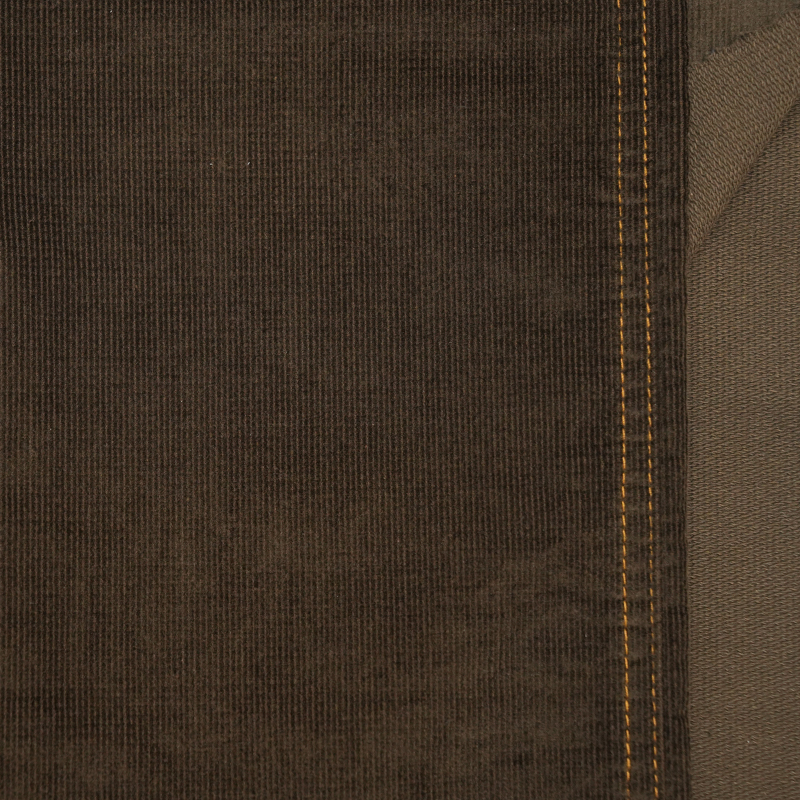
- Cotton corduroy, 8 to 16 wales: the pile takes the paste on the tips and gives a tone-on-tone lift rather than a flat white, so expect softer contrast than on a flat weave.
- Cotton twill and cavalry twill, 220 to 320 gsm: the diagonal structure hides minor registration drift and holds a crisp edge on medium-size graphics.
- Poplin, dobby and canvas: fine counts discharge quickly and cleanly, while heavy canvas needs a longer steam and a longer wash-off to clear the thick yarns.
Blends behave differently. A cotton and polyester ground will only discharge the cotton portion, so the printed area reads as a heathered, salt-and-pepper white. That effect is repeatable when the blend ratio is fixed at the yarn stage rather than mixed at the greige stage. For 100 percent cotton grounds we hold a broad corduroy dyed fabric range in stock shades that can be overprinted without opening a fresh dye lot.
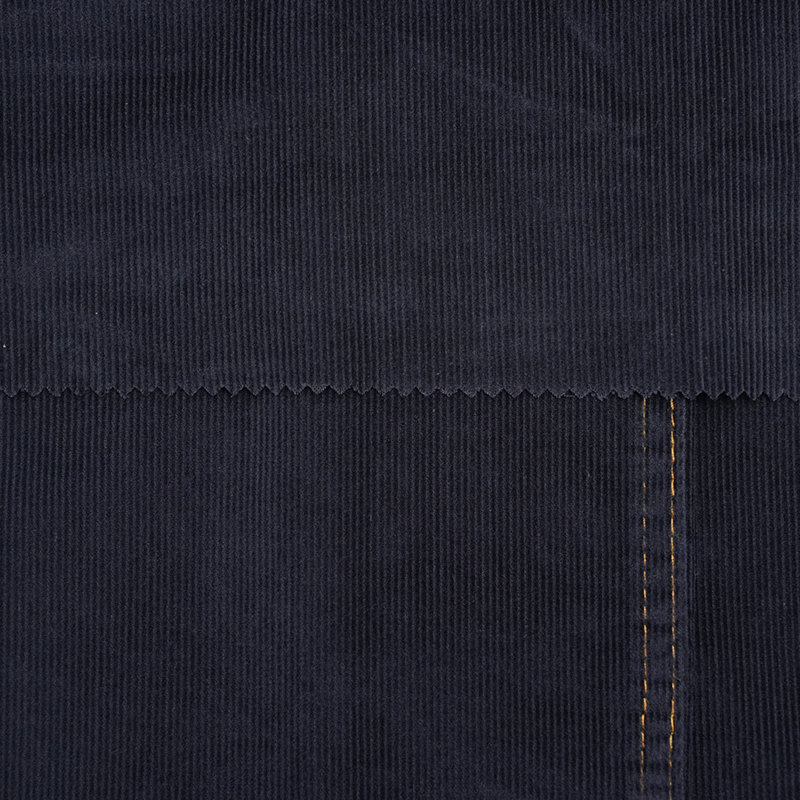
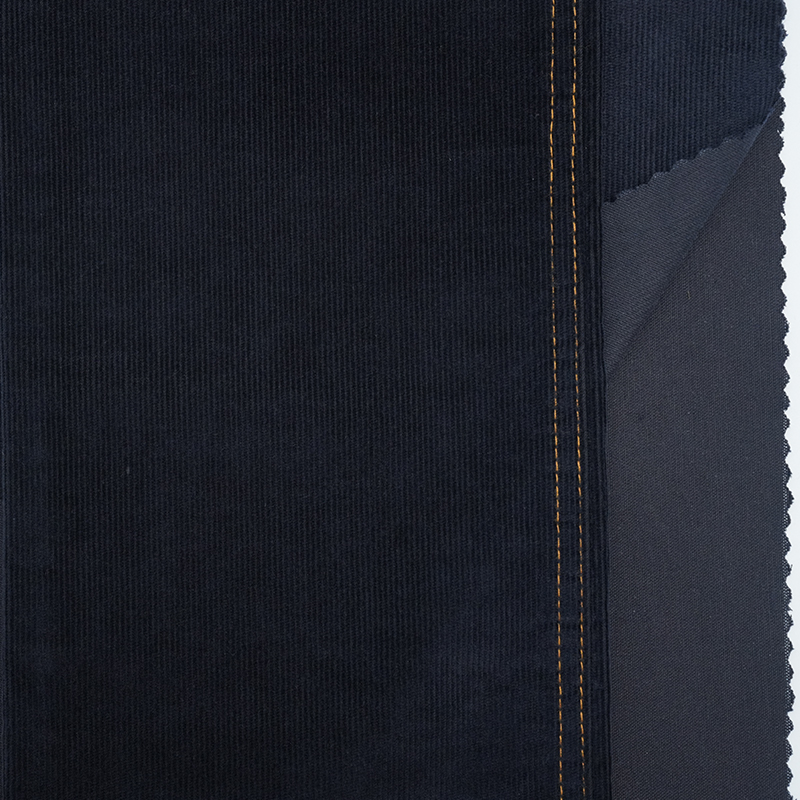
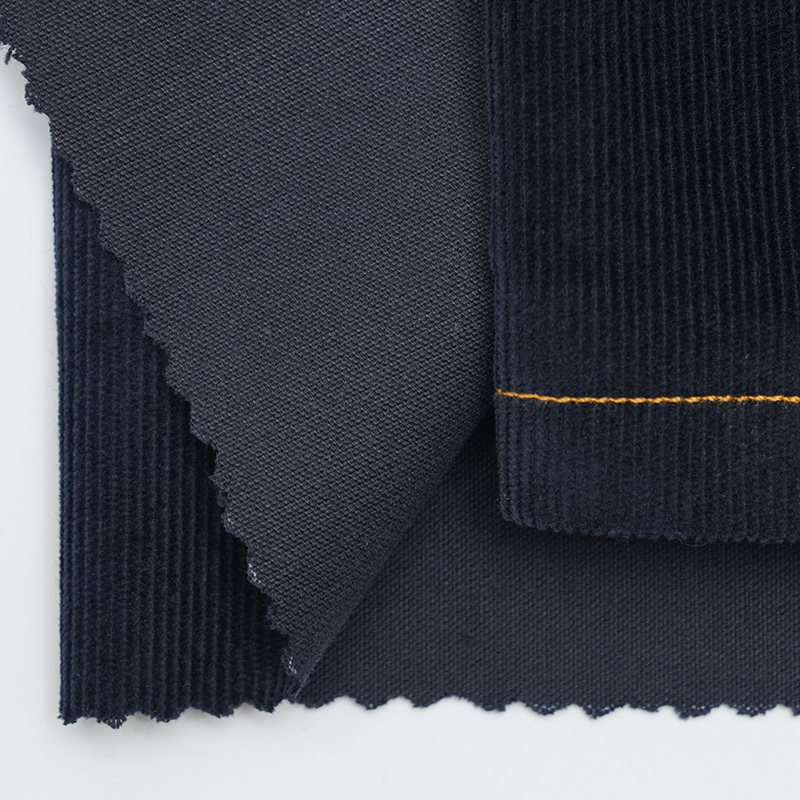 GS1155 GRS Cotton Corduroy Dyed FabricA stretch cotton corduroy with recycled cotton content, 290 GSM weight, and 57/8-inch width; worth reviewing before blend-specific trial checks.View Product →
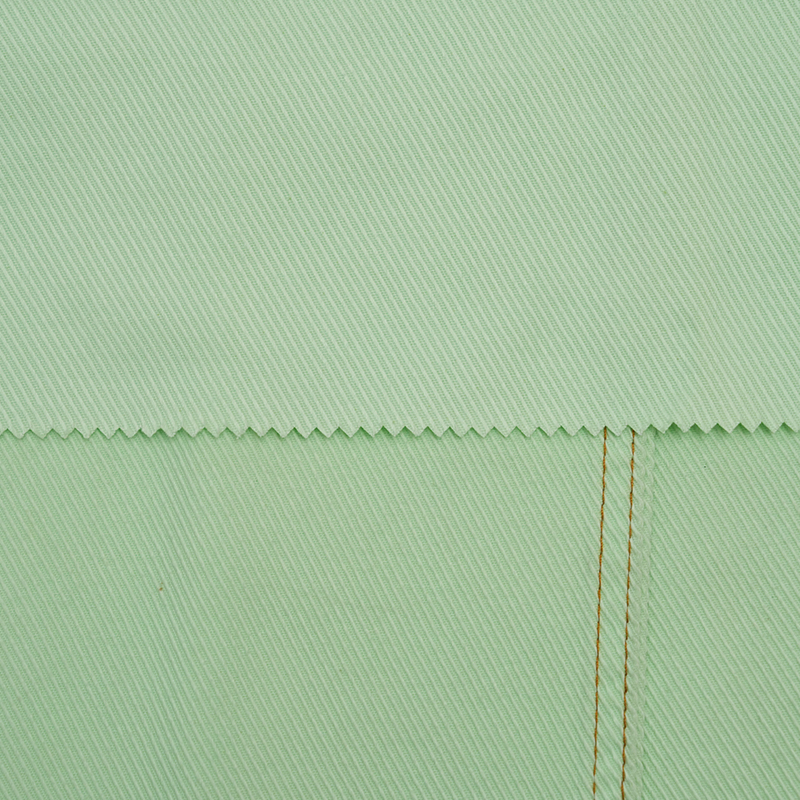 GS2300 All-Cotton Cavalry Slanted Dyed ClothA 100% cotton cavalry slanted cloth at 285 GSM, positioned for uniforms and outerwear; review its construction and dyed finish before trial checks.View Product →
 GS4660 Cotton Prepared Dyed Printed FabricA cotton-spandex prepared dyed and printed fabric at 195 g/sqm; review its stretch, hand feel, and printed finish before trial checks.View Product →
The Checks That Decide a Bulk Discharge Order
Run the checks in this order. Skipping ahead is how a mill turns a 30 metre trial into 3,000 metres of second-quality cloth.
- Confirm the dye class and dye lot of the ground shade in writing before the print trial is scheduled.
- Discharge a lab swatch and read the white point against a grey scale, not against an impression in the light box.
- Test tensile and tear strength on the discharged area, because over-reduced cellulose loses strength even when the shade looks correct.
- Wash and rub test the finished piece after wash-off, at the fastness standard named in the purchase order.
- Seal a sample for 24 hours and check for odor, which catches incomplete wash-off faster than any instrument in the lab.
A discharge print that looks right on the table and smells of sulfur in the bag is not a finished print. Odor complaints arrive after the garments are packed, when the cost of rework is at its highest.
Cost and Cycle Time, in Practical Terms
Discharge adds wet processing rather than ink, so the cost sits in time and yield more than in material.
2extra wet passes, steaming and soaping, added to the finishing route of an already dyed fabric
4 to 8%shrinkage and handling loss to allow for when booking greige, depending on construction and wash-off intensity
1 to 2shade resubmissions typical before a dark ground and a colored paste are matched to an approved standard
The savings usually come from the fabric itself. A discharged print needs no opaque white base, so less paste goes down on large coverage graphics, and the finished hand feel often lets a lighter weight cloth pass a wear test that would otherwise require something heavier.
Questions Buyers Ask Before Booking a Discharge Run
Does discharge printing work on polyester and polyester blends?
Not on the polyester portion. Disperse dyes on polyester resist the reducing paste, so a poly-cotton ground prints only where cotton is exposed at the surface, producing a heathered effect. For a solid white on a polyester-rich ground, an opaque overprint is the realistic route.
Is discharge more expensive than pigment printing?
On light coverage, yes, because of the extra steaming, wash-off and inspection. On large dark-ground graphics the gap narrows quickly, since discharge uses far less paste and no white base layer.
Can a discharged area yellow during storage?
It can, from two causes: residual reducing chemical left in the cloth after a short wash-off, or a ground dye that was only partly destroyed and re-oxidises. A sealed-sample odor check and a 72 hour storage test catch both before bulk.
Can discharge be combined with other print effects?
Yes, and it is common. A discharge paste can be printed alongside a pigment or a burn-out in the same design, provided the sequence is fixed: the discharge goes down first, is steamed and washed, and the overprint follows on the cleared ground.
Discharge printing rewards buyers who treat dyeing and printing as one decision instead of two. The print house controls the paste, the steam and the wash-off, but the dyer controls whether the pattern is possible at all. Naming the print method on the dyeing order, reading the white point against a measured scale, and checking odor and strength before bulk resolve most of the risk before any metres are committed.
Send the ground shade, the dye class and the artwork together, and one trial run answers the only question that matters: can this cloth be discharged, at this depth, at this hand feel, in this quantity.
Related Products


-

- Address: No.8 Longxuan Road, Lijia Town, Wujin District, Changzhou, China
- Phone: +86-13301509168
- Email: [email protected]
- BE THE FIRST TO KNOW
- For exclusive deals and latest offers, sign up by entering your email address below.
- QUICK LINKS
RELATED CERTIFICATIONS: