English
 中文简体
中文简体 Tiếng Việt
Production of various high-end fabrics reaches 7 million meters annually, including a wide range of fashionable new products and exquisite items, with a broad coverage of color patterns.

Aramid Fibers Explained: Properties, Weave Structure and Sourcing Checks for Fabric Buyers
2026-10-15
Content
A single 12-micron filament of para-aramid carries roughly five times the breaking load of a steel wire of the same diameter, at about one fifth of the weight. That ratio explains why aramid fibers sit inside tire cord, cut-resistant gloves, firefighter turnout shells, hull laminates and industrial filter bags. In fabric sourcing, aramid is rarely bought by the meter. It is bought against a failure mode, whether that is melt-drip, cut, flame, fatigue or elongation, and matching the fiber to that failure mode matters far more than comparing price per kilogram.
What aramid fibers actually are
Aramid fibers are synthetic polyamides in which at least 85 percent of the amide linkages attach directly to two aromatic rings. That rigid, rod-like backbone is what separates them from nylon. Aromatic rings resist rotation, so the polymer chain stays nearly straight, packs tightly, and produces a filament with high tensile strength, high modulus and a decomposition point well above the melting range of ordinary thermoplastics.
1.44 g/cm3 Typical density of para-aramid
~3,000 MPa Typical tensile strength
~2% Elongation at break
~500 C Onset of decomposition
Two structural branches matter commercially. Para-aramid, known chemically as PPTA, is spun from a liquid crystalline solution so the molecular chains align almost perfectly along the fiber axis. Meta-aramid, or MPIA, is spun from a conventional solution and keeps a kinked, zig-zag chain. That single difference in chain geometry explains almost every number on the two fibers' data sheets, and it is why the two are almost never substituted for one another in a qualified product.
Both fibers share one behavior that drives most buying decisions around them: they do not melt. Heated past their service limit, aramid fabrics carbonize and form a char layer at the surface rather than dripping. In protective clothing that distinction is the whole point, because a melting fiber bonds to skin and deepens a burn. Both also resist most organic solvents, fuels and lubricants, though strong acids and bases attack them. Para-aramid is notably sensitive to ultraviolet light, which is why outdoor aramid products are usually coated, laminated or wrapped.
Para-aramid versus meta-aramid
The choice between para-aramid and meta-aramid comes down to whether an application needs mechanical strength or inherent flame resistance, and very few applications need both at once. Start from the failure mode and the fiber selection usually settles itself.
| Property | Para-aramid | Meta-aramid |
| Amide linkage position | 1,4 (para) on the aromatic ring | 1,3 (meta) on the aromatic ring |
| Tensile strength | Roughly 2,900 to 3,400 MPa | Roughly 550 to 700 MPa |
| Initial modulus | Roughly 70 to 110 GPa | Roughly 15 to 20 GPa |
| Decomposition onset | Around 500 C | Around 400 C |
| Limiting oxygen index | Around 29 | Around 28 to 30 |
| UV resistance | Poor, requires coating or covering | Moderate |
| Typical end uses | Tire cord, rope and cable, composite laminates, ballistic panels | Flame-resistant workwear, filtration media, thermal barriers |
If you are specifying protective clothing, start with meta-aramid and only move to a para-aramid blend when cut or abrasion resistance is the limiting factor. If you are reinforcing rubber, resin or cable, para-aramid is the only sensible starting point. Blending the two is possible and does happen in workwear, but each added percentage of para-aramid raises cost sharply while contributing very little to flame resistance.
Aramid does not melt, it carbonizes. Almost every specification, test method and certification in this category traces back to that one property.
How aramid fiber becomes fabric
Aramid reaches a mill as continuous filament yarn or as staple spun yarn, and the woven structure has as much influence on finished performance as the fiber itself does. Filament yarn goes into structural reinforcement, rope and tire cord, where a broken filament cannot be allowed to slip. Staple spun yarn produces the softer hand used in gloves, flame-resistant garments and blended fabrics, and meta-aramid is frequently blended with cotton, viscose or modacrylic to cut unit cost while keeping the inherent flame resistance.
Weave design then decides what the fabric will actually do on the floor.
- Plain weave delivers the highest interlacing density, so it gives the best cut and abrasion resistance, at the cost of a stiffer hand.
- Twill is softer and more drapeable with good tear strength, which is why it dominates flame-resistant workwear shells.
- Satin offers a smooth surface that takes coating and lamination well, and is often used as a base cloth for technical laminates.
- Knitted and terry structures handle gloves and the comfort layer worn next to skin.
Finishing is where most projects run into trouble. Aramid is genuinely hard to dye. The tightly packed aromatic structure resists water-soluble dyes, so the fiber is either solution-dyed, with pigment added straight into the spinning dope, or dyed under high temperature and pressure with carriers and specially formulated disperse or cationic systems. Matching dye chemistry to fiber type is one of the most common causes of rejected aramid lots.
Finishes applied after dyeing, including water repellency, flame-retardant boosters, coatings and antistatic treatment, must also be compatible with the fiber. Coatings bond mechanically to an aramid surface rather than chemically, so surface energy and pretreatment matter more here than they do on cotton.
Where aramid fiber earns its price
Aramid fibers appear wherever failure has serious consequences and no economical substitute clears the same performance bar. The application list is short because the fiber is expensive, and long because in each case the alternative is heavier, thicker or simply unsafe.
- People protection covers cut-resistant gloves, flame-resistant workwear, firefighter turnout shells, military and police fabrics, and flight suits.
- Transport relies on aramid for tire cord, brake pad reinforcement, belt and hose reinforcement, and safety harness webbing.
- Industry uses it in high-temperature filter bags, conveyor belting, ropes and mooring lines, gaskets and seals.
- Composites and structures include boat hulls, aircraft interior panels, wind energy components, sporting goods and structural strengthening fabrics for buildings.
- Electrical and optical applications use aramid as a strength member in optical cables and specialty cable assemblies.
Aramid rarely wins on strength alone. It wins because it holds its dimensions and shape at temperatures where polyester has long since turned to liquid.
In woven filtration media, aramid cloth absorbs the repeated mechanical shock of a pulse-jet cleaning cycle without creeping the way homopolymer fibers do, which is why it holds up in cement, asphalt and metal processing plants. Woven fabrics used in industrial filters and screens depend on exactly that combination of dimensional stability and heat tolerance.
When aramid is over-specification
Aramid is the wrong purchase when the flame resistance an application needs can be delivered by a finish rather than by the fiber itself. Aramid costs several times what cotton costs, is harder to dye and finish, and often cannot be softened on standard equipment.
Aramid earns its place when
- Failure involves flame, cut or fatigue
- Weight reduction drives the whole design
- Service life spans years of exposure
- Certification requires inherent, not applied, flame resistance
- Thickness and mass budgets are already tight
A woven alternative fits better when
- Flame resistance comes from a durable finish
- Hand feel and comfort outrank tensile strength
- Volume is high and replenishment must be fast
- Budget rules out specialty yarns entirely
- The end product is apparel, home textile or accessory goods
For apparel programs that do not genuinely need aramid, cotton blended dyed fabric such as modal-cotton, viscose-cotton and Tencel-cotton offers strong hand feel, drape and dyeability at a fraction of the unit cost. A mill running dyeing and finishing in one chain can usually quote a comparable construction faster than a specialty aramid supplier can, and the shade range is far wider.
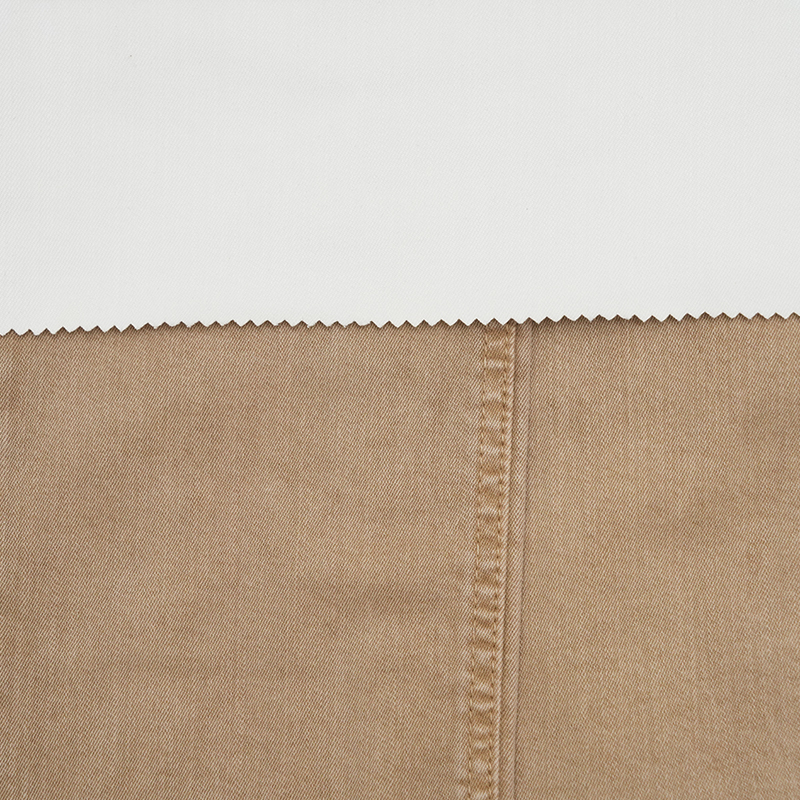 Cotton Blended Dyed Fabrics for Apparel ProgramsExplore cotton blended dyed fabrics, including Tencel, modal, and rayon-cotton options, for apparel programs needing hand feel, drape, and dyeability.View Product →
On the industrial side, cotton coated dyed cloth layers abrasion resistance and water repellency onto a woven base, which covers a good deal of the same ground as an aromatic fabric at a much lower cost per meter.
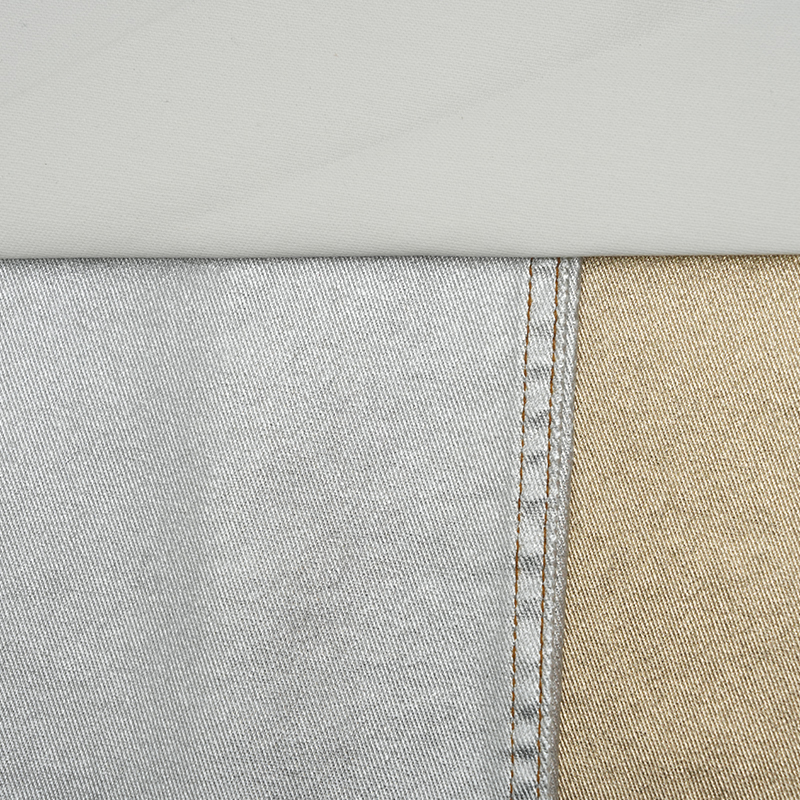 Coated Dyed Cloth and Cotton Coated FabricsSee coated dyed cloth, including GS3170 cotton twill coating, for functional textile uses needing waterproof, oil-proof, or UV-proof properties.View Product →
What to confirm before you buy
Aramid fabric sourcing lives or dies on a short list of parameters, and none of them can be confirmed from a general specification sheet alone. Work through them in order.
- Define the failure mode first. Write down what the fabric has to survive, whether that is a flame exposure, a cut hazard, a fatigue cycle or a UV service life, before looking at any fiber.
- Confirm the fiber type and blend ratio. Para-aramid and meta-aramid are not interchangeable, and a percentage quoted as approximate is not a specification.
- Lock the construction. Confirm yarn count, gray weight, width and weave. The performance gap between plain and twill aramid of the same weight is wide enough to change a test result.
- Agree the coloration route. Decide between solution-dyed, piece-dyed and garment-dyed before sampling, because each route carries different tolerances on shade and shrinkage.
- Require finished-state data. Ask for strength, elongation, shrinkage and flammability measured after the final finish, not on greige or on a laboratory hand sample.
Frequently asked questions
What temperature can aramid fiber withstand?
Para-aramid begins to decompose at roughly 500 C and meta-aramid at roughly 400 C. Neither fiber melts. Both carbonize, forming a char layer that insulates the fabric behind it, which is the reason aramid is specified for protective clothing where a melting polymer would bond to skin and make a burn far worse.
Can aramid fiber be dyed?
Yes, but it is difficult. Dye molecules struggle to penetrate the highly oriented aromatic structure, so producers rely on solution dyeing, high-temperature carrier dyeing, or formulated disperse and cationic systems. Solution dyeing is the usual route for high-volume colors because the pigment goes into the spinning dope and the colorfastness is far better. Always confirm a dye-to-fiber match with a lab dip before committing to bulk.
Why does aramid degrade outdoors?
Aromatic polyamides are sensitive to ultraviolet light. Sustained sun exposure breaks down the outer surface of the fiber and strength drops with it. Coatings, films, wrapping and lamination all slow the loss. If a program involves long-term outdoor exposure, specify residual strength testing after accelerated weathering rather than relying on laboratory baseline figures.
Can aramid fiber be recycled?
Only with difficulty. Thermoplastic fibers can be melted and re-pelletized, but aramid does not melt. Mechanical recycling can cut it into short fiber for pulp, friction materials or nonwoven filler, and chemical recycling remains at pilot scale. Treat aramid waste as a downgrade stream and budget for it accordingly.
Related Products

-

- Address: No.8 Longxuan Road, Lijia Town, Wujin District, Changzhou, China
- Phone: +86-13301509168
- Email: [email protected]
- BE THE FIRST TO KNOW
- For exclusive deals and latest offers, sign up by entering your email address below.
- QUICK LINKS
RELATED CERTIFICATIONS: