English
 中文简体
中文简体 Tiếng Việt
Production of various high-end fabrics reaches 7 million meters annually, including a wide range of fashionable new products and exquisite items, with a broad coverage of color patterns.

Corduroy Dyed Fabric: Wale Count, Fiber Types & Sourcing Guide 2026
2026-06-18
Content
Wale Count Is the First Decision You Should Make
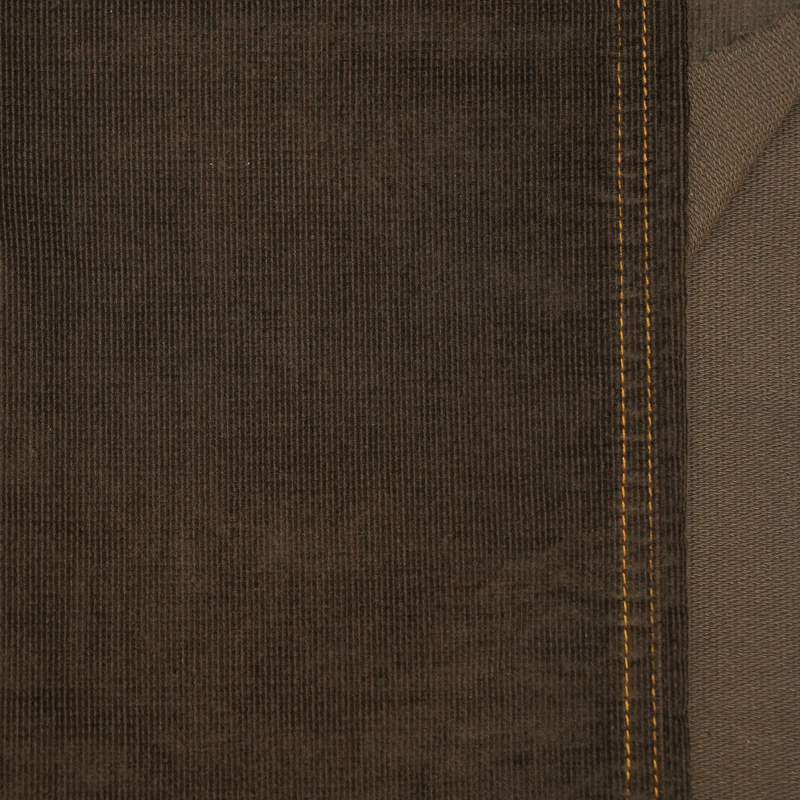
Sourcing corduroy dyed fabric without locking in the wale count first is like ordering fabric without specifying weight — the downstream consequences are real. Wales (the raised parallel cords running lengthwise) are measured in cords per inch; the lower the number, the wider and more prominent the rib.
For practical sourcing decisions, the ranges break down as follows:
- 4–8W (wide wale): Bold texture, high visual impact. Best for outerwear, upholstery, and structured jackets. Higher GSM typical.
- 9–12W (mid wale): The most widely used range. Balanced drape, suitable for trousers, shirts, and casual outerwear. The classic 11W sits squarely here.
- 14–24W (fine wale): Finer ridges, softer hand, closer to velveteen at the high end. Preferred for dresses, children's wear, and premium shirting.
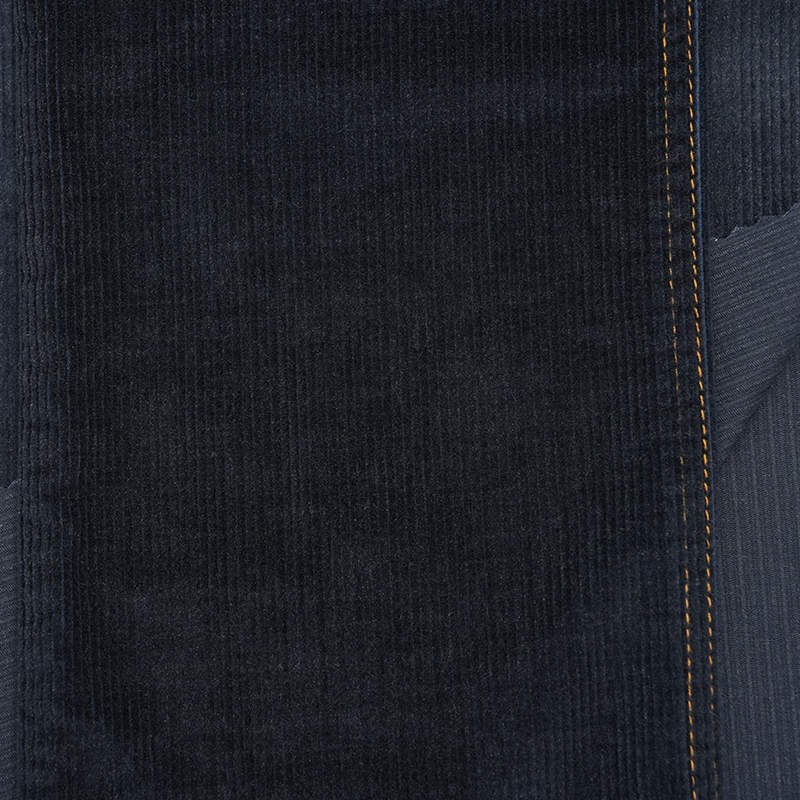
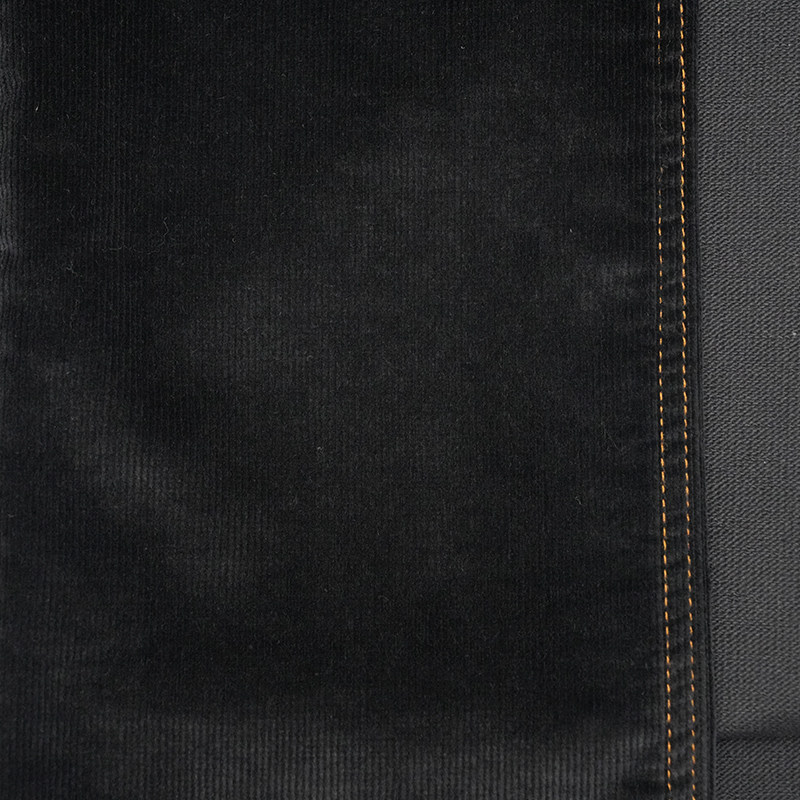
The GS3543 11W cotton corduroy — 100% cotton, 265 GSM, width 56/7 inches, yarn spec 16×21/65×150 — is a representative mid-wale option: substantial enough for structured garments, light enough for comfortable everyday wear. At the other end of the range, the GS2410 24WF velveteen pushes into near-luxury territory, where the pile becomes dense enough to blur the boundary between corduroy and velvet.
Fiber Content Changes How the Fabric Performs — and How It Dyes
Pure cotton remains the default for most corduroy dyed fabric production, and for good reason: it accepts reactive dyes evenly, delivers reliable color fastness, and breathes well in end use. 100% cotton corduroy accounts for over 70% of global production, and for autumn/winter collections it remains the safest specification for new product lines.
That said, blended constructions solve specific problems that pure cotton cannot. Key options and their trade-offs:
- Cotton + Modal: Modal adds a silkier hand and better moisture-wicking without sacrificing dye uptake. The GS1158 Cotton-Modal Jacquard Dobby variant is a strong example of this blend applied to textured weaves.
- Cotton + Spandex (stretch corduroy): Typically 97/3 or 98/2 ratio. Adds recovery and comfort for fitted styles. The GS4653 11W Stretch Cotton Corduroy targets exactly this application.
- Cotton + Rayon: Improves drape and sheen. More suited to lighter-weight or fashion-forward constructions than hard-wearing workwear.
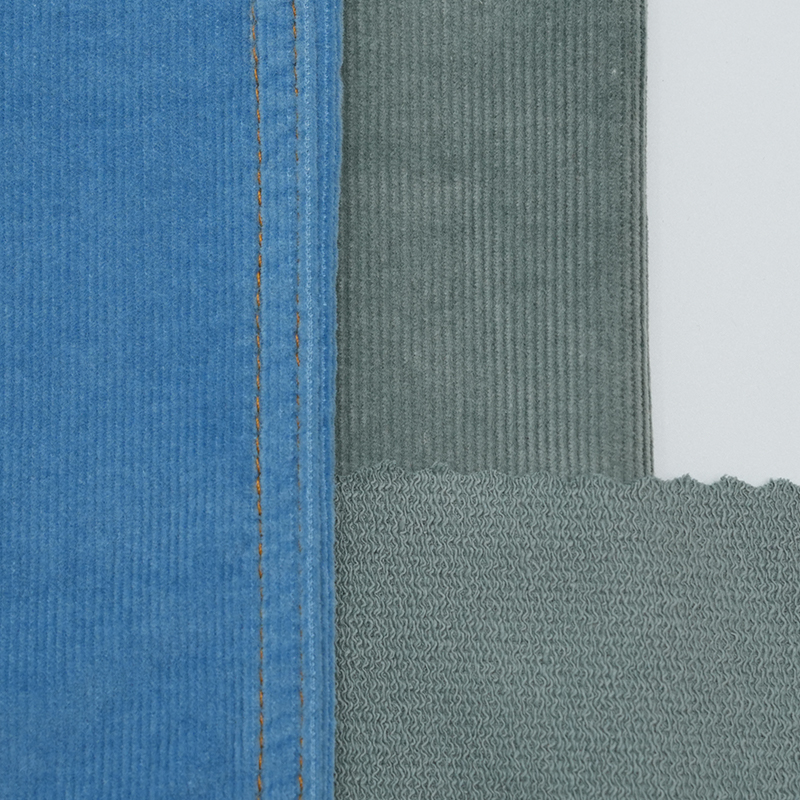
- GRS-certified recycled cotton: Growing demand from brands with verified sustainability commitments. The GS1155 14W GRS Cotton Corduroy carries Global Recycled Standard certification — increasingly a hard requirement for European and North American retail buyers.
Blend choice also directly affects dyeing behavior. Modal and rayon take up dye faster than cotton, which means two-component blends require careful bath management to achieve level color across the fabric width. Confirm this capability with any supplier before ordering a multi-fiber construction in a saturated color.
Jacquard and Dobby Constructions: When Standard Corduroy Isn't Enough
Standard cut-pile corduroy covers most applications, but jacquard dobby corduroy dyed fabric adds a structural dimension that plain-wale styles can't match. The base weave carries a woven pattern — geometric, floral, or abstract — underneath the pile texture. The result is a fabric that reads as visually layered rather than simply textured.
This construction is particularly relevant for premium outerwear, fashion-forward trousers, and upholstered goods where the fabric needs to carry design interest without printed patterns. The GS1160 GRS Cotton 11W Jacquard Dobby combines the sustainability credentials of recycled cotton with the added visual complexity of a dobby weave — a combination that checks multiple sourcing boxes simultaneously.
GSM, Width, and Color: Three Specs Buyers Often Overlook
Wale count and fiber get most of the attention, but three additional specifications determine whether a fabric actually works in production:
- Weight (GSM): For structured trousers and jackets, look for ≥250 GSM. The GS3543 11W at 265 GSM sits in the right zone. Lighter weights (180–220 GSM) work for shirts and layering pieces but will feel insubstantial in outerwear.
- Width: Standard corduroy runs 56–58 inches. Directional cutting (all wales aligned) adds 10–15% to fabric consumption — factor this into your costing before comparing price-per-meter across suppliers.
- Color fastness: Corduroy pile surfaces are prone to rubbing loss (crocking) in dark colorways. Ask for ISO 105-X12 rub-fastness test results. Grade 3–4 dry and ≥3 wet is the accepted baseline for apparel. Any supplier unable to provide test data on saturated colors is a risk.
Cotton-blend corduroy constructions — particularly double corduroy with Modal content — tend to achieve better softness retention after repeated washing compared to 100% cotton equivalents. If the end use involves frequent laundering (children's wear, workwear), this trade-off is worth evaluating.
Five Questions to Ask Before You Confirm a Bulk Order
No fabric specification survives contact with production unless the supplier can actually execute it consistently. Before committing to volume, run through these five checks:
- What is the shade-matching tolerance? Request ΔE ≤1.0 CIE Lab between lab dip and bulk production — anything looser creates unacceptable color variation across rolls.
- Can you provide a GRS or GOTS certificate? If sustainability claims matter to your buyers, verify at source. Certificate numbers should be traceable on the issuing body's registry.
- What is the shrinkage rate after pre-washing? Corduroy typically shrinks 3–5% warp-wise. Confirm pre-shrunk treatment or design your patterns accordingly.
- What is the minimum order quantity per colorway? A supplier with 7 million meters annual capacity (like a properly scaled dyed-fabric mill) can usually accommodate smaller per-colorway MOQs than smaller operations — clarify this before design lock-in.
- Is the pile direction consistent roll to roll? A single roll with inconsistent nap direction will cause shading issues in cut panels. Ask for physical samples cut across multiple rolls, not just one.
Corduroy remains one of the most specification-sensitive fabrics in apparel sourcing. The wale count, fiber blend, GSM, and dyeing method each pull in different directions — and the right combination depends entirely on what the end garment needs to do. Matching those parameters accurately from the start is what separates a smooth production run from an expensive rework.
Related Products



-

- Address: No.8 Longxuan Road, Lijia Town, Wujin District, Changzhou, China
- Phone: +86-13301509168
- Email: [email protected]
- BE THE FIRST TO KNOW
- For exclusive deals and latest offers, sign up by entering your email address below.
- QUICK LINKS
RELATED CERTIFICATIONS: