English
 中文简体
中文简体 Tiếng Việt
Production of various high-end fabrics reaches 7 million meters annually, including a wide range of fashionable new products and exquisite items, with a broad coverage of color patterns.

Jacquard Dobby Corduroy Dyed Fabric: A Deep Dive into Textured Weaving
2026-05-09
Content
- 1 The Distinct Core of Three Weaving Giants
- 2 Jacquard Dyed Fabric: Painting with Fibers
- 3 Dobby Dyed Fabric: The Architecture of Micro-Texture
- 4 Corduroy Dyed Fabric: Mastering the Wales
- 5 The Interplay of Dye Chemistry and Weave Structure
- 6 Performance Attributes in Finished Applications
- 7 Strategic Sourcing and Specification Considerations
The Distinct Core of Three Weaving Giants
The direct distinction lies in the mechanical loom mechanism and the scale of the pattern. Jacquard weaving controls individual warp threads for intricate, large-scale figurative designs. Dobby weaving utilizes a mechanism controlling harnesses for small, geometric, repeating textures. Corduroy is not defined by the loom head but by a supplementary weft that creates a float which is later cut to form raised wales. The dyeing stage, performed on the finished woven fabric, interacts uniquely with these structural depths, creating radically different visual depths and tactile hands.
Jacquard Dyed Fabric: Painting with Fibers
Jacquard sheds are crafted on a loom equipped with a head motion that allows for the independent lifting of any combination of warp ends. This freedom creates complex motifs like brocades, damasks, and tapestries. When piece-dyed, the varied densities and weaves within a single Jacquard design absorb dye liquor at differential rates. A tight satin weave reflects light and takes color intensely, while a loose plain weave area scatters light, appearing matte and slightly lighter. This inherent yarn-level control eliminates the need for printing in many high-end applications, as the pattern is structural, not surface-level. The result is a motif that will never fade or crack with abrasion.
Fiber Selection and Depth Penetration
The choice of fiber drastically alters the dyed Jacquard outcome. Cellulosic fibers like cotton require reactive dyes, which bond covalently, offering high wash fastness in complex woven structures. For instance, a cotton Jacquard duvet cover weighing 220 GSM can withstand industrial laundering without losing structural pattern definition. Viscose Jacquards, utilizing direct dyes, offer a deeper, more intense black than cotton due to the fiber's higher amorphous region, which captures more dye molecules. However, this often comes with a reduction in wet strength, dropping by up to 40% when saturated, a critical factor for upholstery textiles.
Dobby Dyed Fabric: The Architecture of Micro-Texture
Dobby looms operate with a limited frame capacity, typically up to 32 shafts, restricting patterns to small, repeating geometric figures or textures. The resulting fabric is instantly recognizable by its disciplined, orderly surface. When dyed in solid shades, the Dobby weave introduces a critical functional advantage: structural memory. A garment made from dyed Dobby cotton, such as a shirt with a subtle diamond weave, retains 15% more tensile strength than a plain weave of identical weight and yarn count. The interlacings act as stress-distribution points, preventing seam slippage. The dye enhances the visibility of the texture, with reactive dyes creating a stark contrast between the raised and recessed points of the weave, making a micro-waffle or bird's-eye pattern highly prominent.
Piece Dyeing vs. Yarn Dyeing in Dobby
While yarn-dyed Dobby offers crisp, lasting patterns, piece-dyed Dobby provides unmatched inventory flexibility and a heathered potential. A griege Dobby fabric can be stockpiled and rapidly dyed-to-order in small batches, reducing lead times by 3 to 4 weeks compared to yarn-dye scheduling. A practical technique involves cross-dyeing a Dobby woven with a cotton warp and a filament polyester weft. In a single dye bath with disperse and reactive dyes, the warp solidifies into a matte base while the weft takes on a contrast color, creating an iridescent micro-texture from a single piece-dye process without the expense of dual yarn dye lots.
Corduroy Dyed Fabric: Mastering the Wales
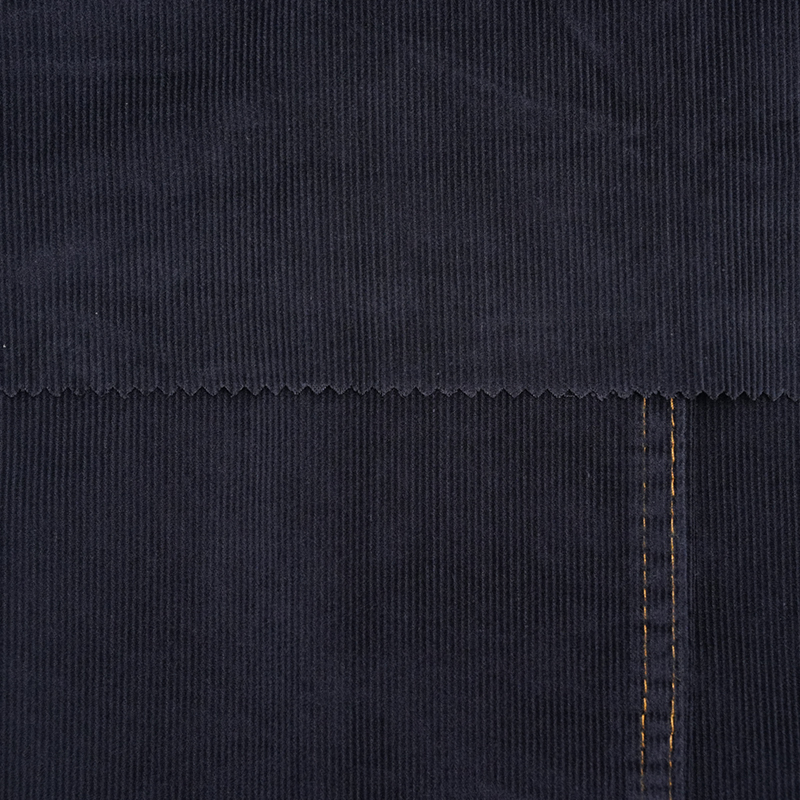
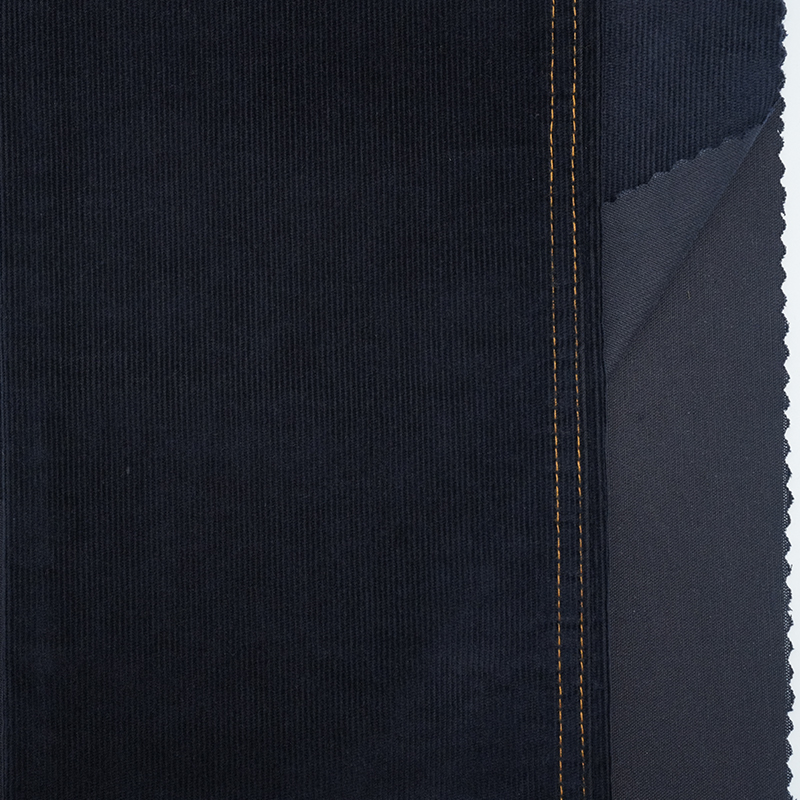
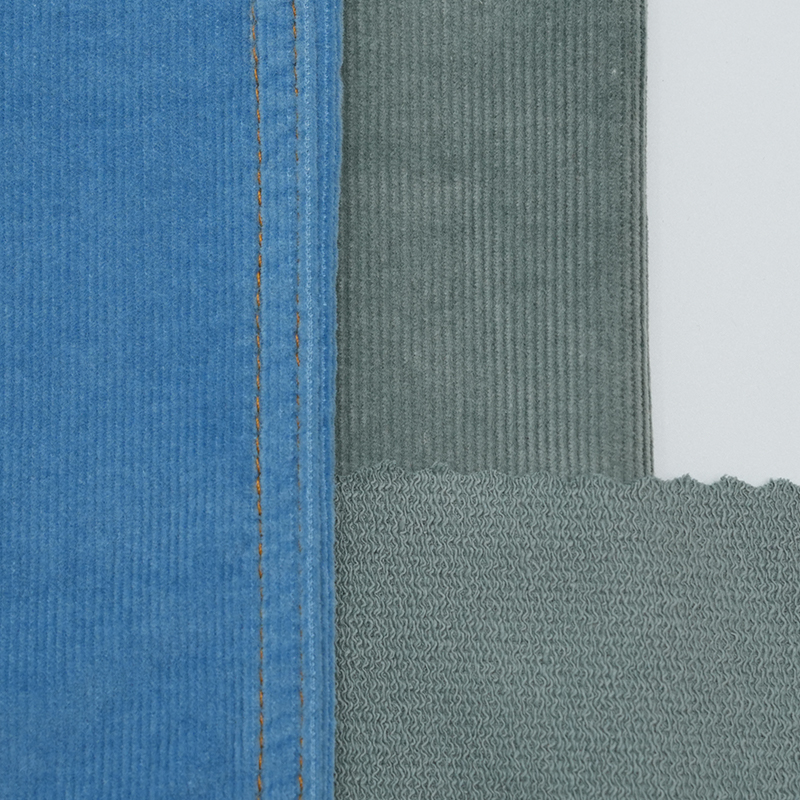
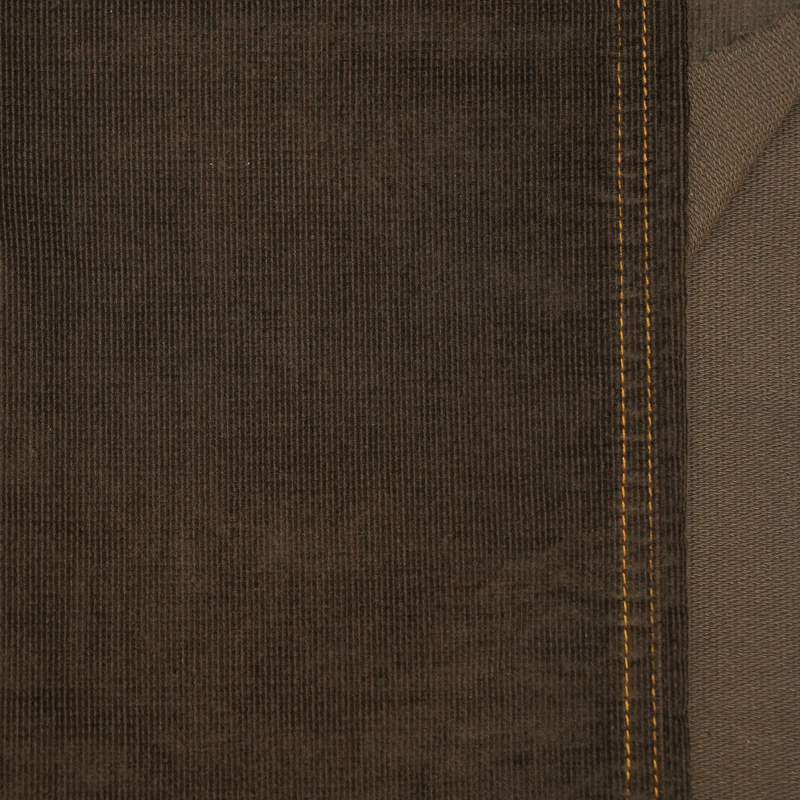
Corduroy construction begins with a ground fabric and floating weft picks, which are slit with a rotary blade after weaving to form vertical ribs called wales. The dyeing process for Corduroy is fraught with challenges directly related to these cut fiber bundles. If the cutting blades are slightly dull, a phenomenon known as "cut-pile scuffing" occurs, where the tips of the wales are abraded rather than cleanly severed. During jet dyeing, the high-pressure fluid forces these roughened tips to entangle, creating a permanently matted, streaky appearance that cannot be corrected. A clean cut is non-negotiable for a uniform dyed finish.
The wale density dictates the visual impact of the dye. Wide-wale Corduroy, with 3 to 5 wales per inch, presents broad, plush ribs that catch ambient light, making a dyed color appear richer and darker. Pinwale Corduroy, packing 16 to 21 wales per inch, creates a fine, suedelike surface where the dye reflects more softly, often appearing lighter than the identical dye formulation on a wide wale. This is due to the increased surface area scattering incoming light. For a deep, solid navy shade on a 21-wale pinwale, a dyer must increase the dye concentration by 1.2% to visually match the depth perceived on an 8-wale fabric.
| Fabric Type | Pattern Mechanism | Dye Uptake Behavior | Primary End Use |
|---|---|---|---|
| Jacquard | Individual warp control | Differential absorption | Upholstery, high-end apparel |
| Dobby | Harness grouping (≤32) | Uniform, texture-highlighting | Shirting, lightweight bottoms |
| Corduroy | Cut weft floats (wales) | Light-scattering pile effect | Bottoms, outerwear, childrenswear |
The Interplay of Dye Chemistry and Weave Structure
The final shade is a numeric outcome of how weave interlacings scatter light. A plain weave base in a Dobby will always appear lighter than a satin base in a Jacquard dyed in the same bath, a phenomenon quantified by the Kubelka-Munk theory. The dye's penetration into a Corduroy wale involves an "inkwell effect," where the base of the wale remains darker and richer, while the tips abrade over time. Understanding these structural interactions allows converters to engineer visual texture without changing the chemical recipe, simply by modifying the loom file to adjust float lengths for higher light reflectance in the dyed state.
Performance Attributes in Finished Applications
Selecting between these fabrics requires matching structural behavior to end-use performance. A dyed Dobby offers superior resistance to bagging and stretching due to the frequent interlacings, whereas a dyed Jacquard provides a fluid drape critical for seating that must cushion complex curves. Corduroy, when properly finished with a durable press resin and dyed to a dark, saturated shade, can withstand abrasion levels of over 30,000 rubs on a Wyzenbeek test if the pile is densely packed and the base fabric is a sturdy twill rather than a plain weave. The wrong pairing, such as a heavy piece-dyed Corduroy with an unstable ground weave, leads to pile compression that creates permanent shiny marks within a few months of regular use on chair arms.
For apparel weight Corduroy, cutting tables must align the nap direction identically for every panel. A panel cut upside down will trap light differently, appearing as a glaring shade mismatch even if all pieces came from the same dyed roll. This directional behavior is absent in Dobby and Jacquard unless they feature a significant brushed or raised finish. In those cases, a standard spread with all nap running upward prevents the dusty appearance that downward-facing pile creates on a finished dyed garment.
Strategic Sourcing and Specification Considerations
Viewing these three fabrics as purely aesthetic choices overlooks significant logistical consequences. A Jacquard fabric's design file can be a proprietary asset, allowing a manufacturer to offer a unique dyed pattern immune to simple printing replication. A Dobby weave can often be replicated swiftly, making it a commodity market driven by price-per-yard and dye lot consistency. Corduroy's value is heavily tied to the wale count and the finishing line's precision in shearing and brushing after dyeing. Specifying a pre-dyed, pre-mercerized cotton for Corduroy is an expensive but effective method to achieve a luminous, long-lasting color clarity that piece-dyed standard Corduroy cannot match. The initial cost increases by approximately 18 to 22 percent, yet the garment's resistance to shade fading after twenty home launderings improves dramatically, justifying the investment in premium product lines where color retention is a core selling feature.
Related Products

-

- Address: No.8 Longxuan Road, Lijia Town, Wujin District, Changzhou, China
- Phone: +86-13301509168
- Email: [email protected]
- BE THE FIRST TO KNOW
- For exclusive deals and latest offers, sign up by entering your email address below.
- QUICK LINKS
RELATED CERTIFICATIONS: